
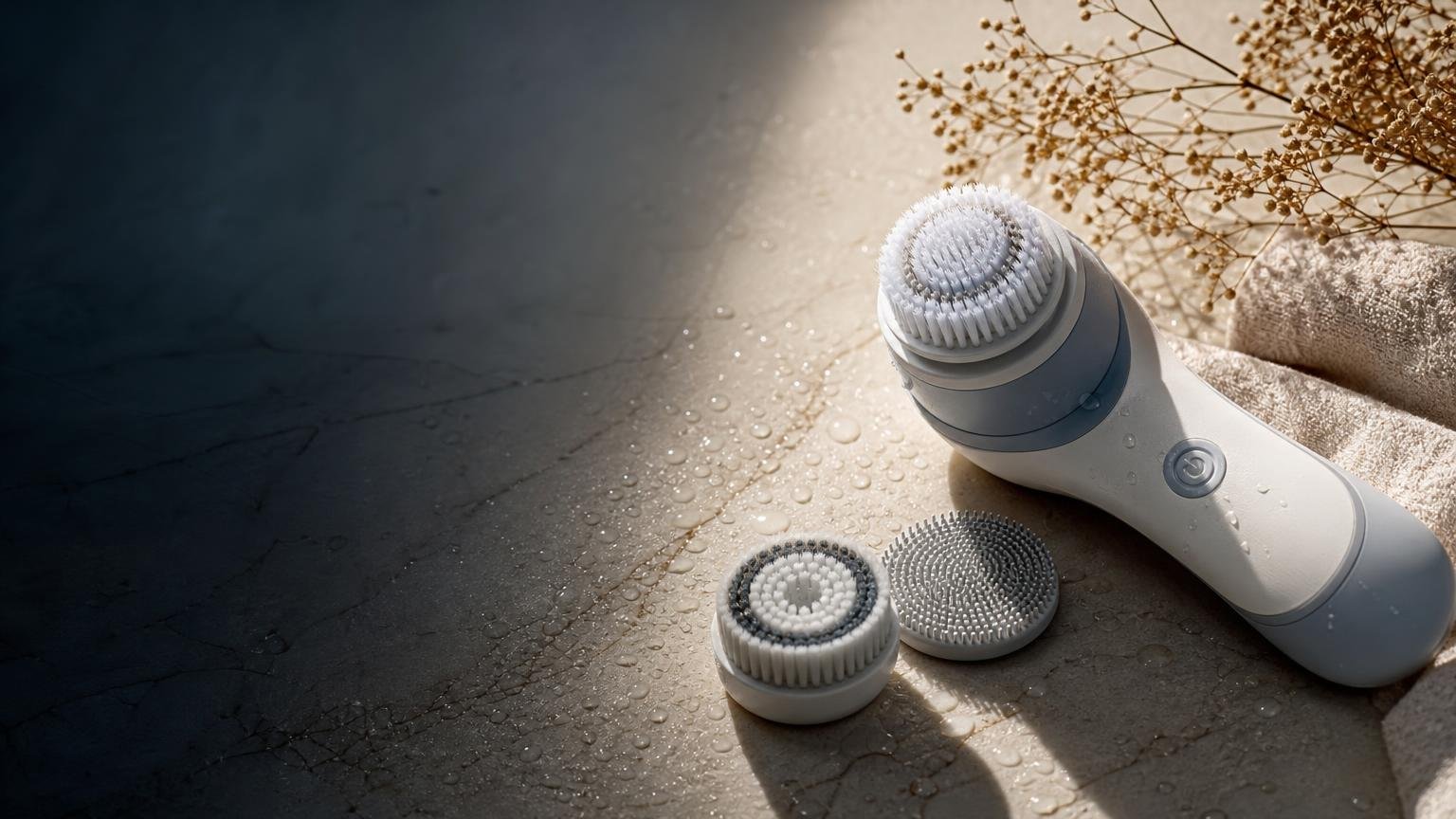
A cleansing brush should remove residue, not make discomfort feel like the price of cleaner skin.
Redness after rinsing, moisturizer that suddenly stings, or flakes appearing around the nose can be mistaken for an adjustment phase. With a cleansing brush, these changes more often point to excess friction or barrier disruption than deeper cleansing. Bumps may also reflect irritation rather than impurities “coming to the surface.” Mechanical cleansing does not cause the type of accelerated cell turnover associated with some active ingredients, so a supposed brush “purge” has little biological basis.
The practical response is to reduce variables: stop the brush until the skin feels settled, then reassess pressure, session length, frequency, cleanser, and brush-head condition. The American Academy of Dermatology (AAD) generally favors gentle cleansing with fingertips when skin is sensitive. If the same reaction returns after careful reintroduction, the brush may simply not be worth using, regardless of its settings or marketing claims. Persistent symptoms or suspected acne, eczema, or rosacea warrant evaluation by a dermatologist.
A cleansing brush irritating skin is usually a signal about pressure, frequency, or timing rather than a verdict on the device.
- Stinging during or after cleansing
- Tightness that persists after moisturizer
- New flakes, tenderness, or clusters of small bumps
When friction exceeds tolerance
Persistent redness, warmth, burning, or a shiny, tight appearance is more consistent with irritation than purging. Purging is associated with ingredients that accelerate skin-cell turnover. A cleansing brush does not create that process through friction.
Add up the mechanical dose
Brush exposure is cumulative. Pressure, motor speed, session length, bristle stiffness, and weekly frequency can each increase friction; raising several at once compounds the load. Using the brush with an exfoliating cleanser, retinoid, AHA, BHA, vitamin C, or benzoyl peroxide can further reduce tolerance.
The practical response is to stop brushing rather than shorten the next session. The AAD generally advises discontinuing products that sting, burn, or irritate skin. Allow skin to return to its usual appearance and comfort before assessing the device again. Persistent, severe, or worsening symptoms warrant advice from a dermatologist.
Decide whether reintroduction adds value
If the skin is comfortable again, a cautious trial can isolate the cause:
- Choose the softest available head and lowest setting.
- Apply no added pressure; let the device rest lightly on skin.
- Limit use to a brief session once weekly.
- Avoid exfoliating actives during the trial, and patch-test those products separately.
If irritation returns despite those limits, reintroduction has little value. A brush that can only be tolerated under highly restrictive conditions may not be worth the money compared with gentle hand cleansing.
When tightness signals barrier strain
Post-cleansing tightness is not evidence of deeper cleaning. When it appears with flakes, redness, or stinging, the combined routine may be removing too much surface oil and disturbing the skin barrier. Hot water, a strongly foaming cleanser, long cleansing sessions, and brush pressure can compound the effect.
The AAD generally recommends lukewarm water, gentle cleansing, and moisturizer when skin is dry or sensitive. A short recovery routine can reduce avoidable variables:
- Stop brush use until ordinary cleansing feels comfortable.
- Use lukewarm water and a mild, fragrance-free cleanser once or twice daily.
- Pat rather than rub the skin dry.
- Apply a simple fragrance-free moisturizer while the skin remains slightly damp.
- Pause scrubs and potentially irritating actives. Patch-test acids, retinoids, or benzoyl peroxide before resuming them.
Several comfortable days with basic products provide a more useful threshold than a fixed waiting period. If stinging returns as soon as the brush is reintroduced at low frequency and minimal pressure, the device probably does not earn its place in that routine. Persistent discomfort, cracking, swelling, or symptoms associated with acne, eczema, or rosacea warrant discussion with a dermatologist.
Friction or contact reaction?
Friction irritation usually follows the brush path. Redness tends to be diffuse, with tenderness, warmth, or stinging during cleansing or soon afterward.
A possible contact reaction is more likely when itching dominates or when swelling, bumps, blisters, or sharply defined patches appear. A delayed reaction can develop hours after cleansing and may extend beyond the areas scrubbed. Timing alone cannot identify the cause.
Plausible exposures include:
- Fragrance, preservatives, or botanical extracts in the cleanser
- Brush filaments, silicone, metal components, or adhesives
- Residual disinfectant, detergent, or cleanser trapped in the head
- Buildup on a damp or overdue replacement head
Stop using the brush and any newly introduced product until the skin settles. Photographs and a simple exposure log can help identify a repeatable pattern. A dermatologist should assess persistent, recurrent, spreading, or severe reactions, particularly when eczema, rosacea, or acne complicates the picture.
Swelling around the eyes or lips warrants prompt medical assessment. Trouble breathing, faintness, or tongue or throat swelling requires emergency care.
Bumps are not a detox phase
There is no established skin mechanism by which a cleansing brush “purges toxins.” New bumps after starting a device more plausibly reflect excess friction, trapped cleanser, or contamination on the brush head. Continuing aggressive cleansing may compound inflammation rather than resolve it.
Check the contact conditions
Friction rises when a brush passes repeatedly over existing bumps, receives added pressure, or runs longer than directed. Inflamed areas should be avoided until they settle. If bumps persist, become painful, or resemble acne, a dermatologist should assess them.
Cleanser can also remain between bristles or along the hairline and jaw. Residue may expose skin to surfactants for longer than intended. Rinse the face thoroughly, then inspect it in good light rather than adding a second cleansing cycle.
Inspect the brush head
A head stored damp in an enclosed shower can retain residue and support microbial buildup. After each use:
- Rinse until the water runs clear.
- Shake off excess water.
- Air-dry the head in an open, clean location.
- Clean the handle and attachment area according to manufacturer instructions.
Replace a head when bristles become splayed, stiff, discolored, or permanently odorous, even if the stated replacement date has not arrived. A worn head delivers less even contact. If careful maintenance and reduced frequency do not stop the bumps, the device is not worth further spending; hands provide a lower-friction alternative.
Count the total irritation load
A cleansing brush does not operate in isolation. Retinoids, exfoliating acids, benzoyl peroxide, granular scrubs, and low-pH L-ascorbic acid formulas can each increase dryness or stinging. Shaving adds another form of mechanical stress. Combining several on the same day may exceed skin tolerance even when each step seems mild.
Separate friction from strong actives
A lower-load schedule is easier to assess:
- Avoid brushing on the same day as scrubs, retinoids, AHAs, BHAs, or benzoyl peroxide.
- Skip the brush immediately before or after shaving.
- Pause brushing while introducing a strong vitamin C formula or another active.
- Use a mild cleanser and moisturizer while the routine is being simplified.
“Daily use” marketing rarely accounts for the rest of a routine. A softer or more expensive brush will not help if overlapping products remain the main source of irritation.
Change one variable at a time
Remove the brush first, then reintroduce products separately after skin feels comfortable. Add only one variable at a time; otherwise, the trigger remains unclear.
Patch-test each new active before broader use. The AAD advises applying it to a small area twice daily for 7–10 days, following rinse-off directions where applicable. Persistent burning, swelling, or cracking warrants stopping the product and seeking professional guidance.
Use less force where the face curves
- Saturate skin and brush head
Fully wet both surfaces, then spread enough mild cleanser to maintain slip. Drag increases when foam thins or skin begins to dry.
- Select the lowest intensity
A higher setting does not produce a proportionally better cleanse. It mainly increases mechanical exposure.
- Rest the brush on the skin
Avoid pressing until bristles bend or the motor slows. Light contact allows the device movement, rather than added hand pressure, to do the work.
- Keep it moving
Use slow, continuous passes. Do not polish one spot, especially beside the nose, along the jaw, or over prominent cheekbones.
- Shorten contact on reactive areas
Give redness-prone or easily stung areas one brief pass, or omit them. A washcloth-free hand cleanse remains the lower-friction option.
- Stop at the first adverse signal
Increasing warmth, stinging, persistent redness, or tightness sets the limit. A device timer and promoted frequency are not targets that need to be completed.
If irritation returns despite minimal pressure and brief use, the brush may offer too little practical benefit to justify its cost.
Repeated passes around the nostrils, hairline, and chin can concentrate friction. Residual sunscreen or makeup is better addressed with a suitable first cleanse than with harder scrubbing.
Is the brush design adding unnecessary friction?
- Contact surface
Stiff, dense, or uneven bristles can concentrate force. Published bristle material and head dimensions are more useful than claims about “deep” cleansing.
Look forSoft, rounded filaments or smooth silicone contact pointsAvoidUnspecified materials, firm bristles, or prominent ridges - Control
Multiple speeds and an automatic timer can limit exposure, but only if the lowest setting is genuinely gentle. A single aggressive speed leaves little margin for sensitive areas.
Look forLow-speed mode, short timer, and easy pressure controlAvoidOne speed, long cycles, or pressure-dependent operation - Cleaning and drying
Crevices, fixed heads, and enclosed storage can retain cleanser and moisture. Removable parts and open-air drying make routine cleaning more practical.
Look forRemovable head, simple seams, and ventilated storageAvoidDeep joints, fixed heads, or sealed wet storage - Ongoing cost
Replacement intervals, proprietary heads, and battery requirements determine long-term value. Frequent replacement weakens the case for a device that performs similarly to fingertips.
Look forPublished replacement schedule and readily available partsAvoidVague schedules or costly proprietary consumables
The AAD advises gentle cleansing with fingertips. If that method removes sunscreen and cleanser without discomfort, an abrasive or maintenance-heavy brush is probably not worth the added expense. Marketing claims about pore cleansing do not offset poor force control or difficult sanitation.
Pause, recover, then test only if useful
-
Stop mechanical cleansing
Set the brush aside until redness, stinging, tightness, or flaking settles. Cleanse with fingertips, lukewarm water, and a mild cleanser.
-
Keep recovery simple
Use fragrance-free moisturizer and sunscreen. Pause scrubs and other irritating actives; patch-test each active before resuming.
-
Reintroduce at low exposure
An optional retrial should use the lowest speed, minimal pressure, and one brief weekly session. Avoid other exfoliation that day.
-
Treat recurrence as evidence
If symptoms return in the same areas, stop. The device, its frequency, or both likely exceed current tolerance; repeated trials add little useful information.
Persistent symptoms or acne, eczema, or rosacea concerns warrant a dermatologist’s assessment.
If the sting starts with the wash itself rather than the brush, why face wash stings walks through the formula and usage factors. Before bringing an active back, a proper patch test takes about a week and removes the guesswork.
A cleansing brush is optional. If fingertip cleansing works without recurring irritation, abandoning the device is the more rational choice.
