
Vitamin C does not have to sting. The form, the strength and the base decide how your skin takes it.
Most vitamin C horror stories come from one kind of product: a high-strength, very acidic serum of pure L-ascorbic acid. Sensitive skin rarely needs that to start. A milder derivative, or a low dose of pure vitamin C in a soothing base, gets you the antioxidant habit without the burn.
Below are four picks that cover that range, from the gentlest option to a sensible step up, plus a plain-English guide to the forms on the label.
- Very reactive skin: start with a derivative such as ascorbyl glucoside.
- Want pure vitamin C? Begin around 5–10%, not 20%.
- Skip fragrance and essential oils, and always wear sunscreen on top.
How to choose a vitamin C serum for sensitive skin
The right vitamin C serum for sensitive skin is usually the gentlest one you will actually use every morning. Consistency beats strength here, because vitamin C works as a daily antioxidant layer rather than a quick fix.
Pure vitamin C (L-ascorbic acid) is the best-studied form. But it only absorbs well in a very acidic formula, below about pH 3.5, according to a dermatology review of topical vitamin C. That acidity is the main reason it stings. So if your skin flushes easily, a derivative or a low-strength formula is the smarter first bottle.
Strength matters too, but more is not better. Another clinical review notes that benefits plateau around 20%, and that higher levels can irritate. For a first bottle on reactive skin, 5–12% is plenty.
Four gentle ways into vitamin C



Vitamin C forms on the label, decoded
The ingredient name tells you more than the percentage on the front. Here is what each common form means for sensitive skin. If you want a refresher on reading a full ingredient list, start with how to read skincare ingredients.
The vitamin C forms you will see
L-ascorbic acid (ascorbic acid)
Pure vitamin C and the most researched form. It needs a low pH to absorb, which is why strong versions can sting. It also oxidizes quickly once opened.
Ascorbyl glucoside
Vitamin C bound to a sugar, which makes it far more stable in water. It is designed to release vitamin C gradually after application. Expect gentler, slower results than pure vitamin C.
Sodium ascorbyl phosphate (SAP)
A water-soluble salt form that stays stable at a skin-friendly pH. It is a common choice in gentle and acne-focused formulas.
Tetrahexyldecyl ascorbate (THD)
An oil-soluble derivative, usually found in silky or oily serums. It is stable, but it has less clinical data behind it than pure vitamin C.
3-O-ethyl ascorbic acid
A modified form of vitamin C that resists oxidation better than the pure form. It sits between pure vitamin C and the milder derivatives.
Magnesium ascorbyl phosphate (MAP)
A stable derivative that the review linked above calls the preferred ester. It is gentle, but not every product delivers it to the skin in useful amounts.
Two practical points follow from this. First, a derivative at 12% is not twelve-percent vitamin C in the way a pure L-ascorbic acid serum is, so the numbers do not compare directly. Second, brands rarely publish how much of a derivative actually converts in skin, so treat big derivative percentages as marketing until proven otherwise.



The best vitamin C serum for sensitive skin, pick by pick
Each pick below suits a different kind of sensitive skin. Read the downside on each one, because that is usually what decides it.
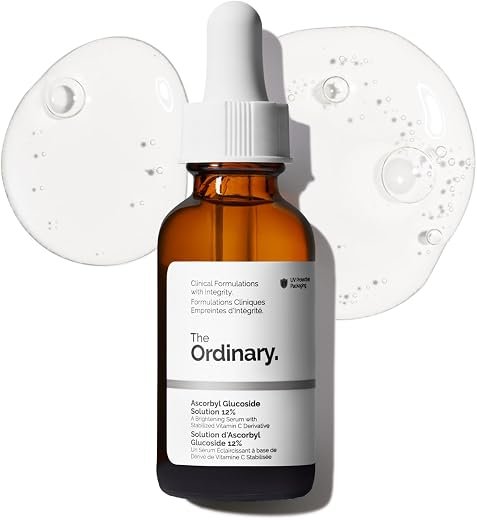
The Ordinary Ascorbyl Glucoside Solution 12%: the gentlest start
01
A stable derivative in a short, fragrance-free formula
This is the bottle to start with if your skin reacts to almost everything. The ingredient list is short: water, ascorbyl glucoside, a few solvents and thickeners, and preservatives. There is no fragrance, no essential oil and no botanical extract in it.
Ascorbyl glucoside is far more stable than pure vitamin C, so it is less likely to turn orange in the bottle or sting on application. The trade-off is pace. Brightening is slower and more subtle than with a well-made L-ascorbic acid serum. Skip it if you want fast, visible results and your skin already tolerates acids.
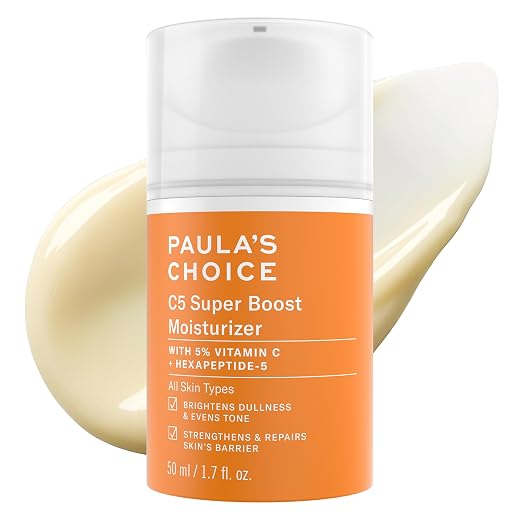
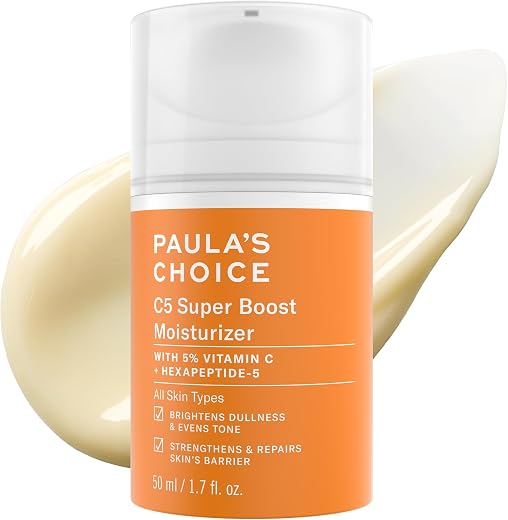
Paula's Choice C5 Super Boost: vitamin C without an extra layer
5% pure vitamin C in a fragrance-free moisturizer
Some sensitive skin does fine with vitamin C but hates thin, acidic serums. This puts a low 5% dose of pure vitamin C into a moisturizer with squalane and peptides, so it replaces a step instead of adding one.
The airtight, opaque container is the right packaging for an unstable ingredient. Skip it if you already love your moisturizer, or if you want a higher dose later; at 5% it sits at the gentle end of pure vitamin C.
TruSkin Vitamin C Serum: soft, hydrating, botanical
Sodium ascorbyl phosphate in an aloe and hyaluronic acid base
TruSkin uses sodium ascorbyl phosphate, a stable derivative that works at a gentle pH. The base is aloe with glycerin, sodium hyaluronate and vitamin E, so it feels more like a hydrating serum than an active.
The catch for sensitive skin is the botanical list: witch hazel water plus centella, horsetail, dandelion and geranium extracts. Many people do fine with these, but they are a common trigger. The vitamin C percentage is not published either. Skip it if plant extracts have bothered you before.
CeraVe Vitamin C Serum: 10% pure vitamin C, cushioned
L-ascorbic acid with ceramides and hyaluronic acid
Once a gentle option has gone smoothly for a few weeks, this is a sensible next step. It pairs 10% L-ascorbic acid with three ceramides, panthenol and hyaluronic acid, which help buffer the acidity. It is fragrance-free and comes in protective packaging.
Two caveats. It contains denatured alcohol, which some dry or reactive skin dislikes. And at 10% pure vitamin C, a little tingling is normal at first. Skip it if your skin is currently irritated or you are starting any other active this month.
How to start a vitamin C serum for sensitive skin
Introducing vitamin C slowly matters more than which bottle you pick. The steps below follow the patch-test method the American Academy of Dermatology recommends, then build up from there.
Introduce vitamin C without a flare
- Patch-test first
Apply a normal amount to a quarter-sized spot, such as the inside of your elbow, twice a day for seven to 10 days. No redness, itching or swelling means you can move to your face. Our patch-testing guide walks through it.
- Start every other morning
Apply a few drops to clean, dry skin. Damp skin can increase penetration and sting. Give it two weeks before going daily.
- Moisturize, then sunscreen
Follow with your usual moisturizer and a broad-spectrum sunscreen. Vitamin C supports sunscreen; it does not replace it.
- Add one new active at a time
Do not start a retinoid or exfoliating acid in the same month. If you also use niacinamide, the pairing is fine; see can you use niacinamide with vitamin C.
- Step up only if you want to
After four to six weeks of calm skin, you can move to a stronger pure vitamin C. Many people never need to.
- Watch the color
Pure vitamin C turns yellow, then orange or brown, as it oxidizes. A dark, rusty serum is past its best; store it closed and away from light.
Vitamin C picks compared
The table lines up the details that matter most for reactive skin: the form, the strength and what else is in the bottle.
The Ordinary 12% | Paula's Choice C5 | TruSkin | CeraVe 10% | |
|---|---|---|---|---|
|
|
|
|
| |
| Vitamin C form | Ascorbyl glucoside | L-ascorbic acid | Sodium ascorbyl phosphate | L-ascorbic acid |
| Strength | 12% | 5% | Not disclosed | 10% |
| Other key ingredients | Almost none | Squalane, peptides | Aloe, vitamin E, botanicals | Ceramides, hyaluronic acid |
| No added fragrance | 1 | 1 | 1 | 1 |
| Watch out for | Slower results | Moisturizer format | Many plant extracts | Denatured alcohol |
| Best for | Very reactive skin | Skin that hates serums | Normal to dry skin | Ready to step up |
| Check price at Amazon.com | Check price at Amazon.com | Check price at Amazon.com | Check price at Amazon.com |
What to look for on the label
- The form, not just the percentage
A derivative and pure vitamin C at the same number are not equivalent. Choose the form first, then the strength.
Look forAscorbyl glucoside, SAP or MAP for a gentle start; L-ascorbic acid at 5–10% for a step up.AvoidJumping straight to 20% L-ascorbic acid on reactive skin. - No fragrance or essential oils
Fragrance is a frequent cause of reactions, and citrus or lavender oils are common in vitamin C serums.
Look for"Fragrance-free" on the box and no parfum, limonene, linalool or citrus oils in the list.AvoidSerums that smell of oranges. - Packaging that blocks air and light
Pure vitamin C degrades with light and air, and a degraded serum can irritate more while doing less.
Look forOpaque, airtight pumps or tubes. See <a href="https://theskincarespace.com/how-to-store-skincare-products/">how to store vitamin C</a>.AvoidClear dropper bottles of pure vitamin C. - A forgiving base
Humectants and barrier lipids soften the feel of an acidic active.
Look forGlycerin, hyaluronic acid, ceramides, squalane.AvoidHigh denatured alcohol if your skin is dry or tight.
If you are combining vitamin C with other actives, check the pairings in skincare ingredients that work against each other and keep the order simple with our morning and night layering guide.
Frequently asked questions
Can sensitive skin use vitamin C?
Yes, most of the time. The trick is choosing a gentle form or a low strength, skipping fragrance, and introducing it slowly. Skin with active rosacea flares or eczema should check with a dermatologist first.
Why does my vitamin C serum sting?
Usually because it is pure L-ascorbic acid at a low pH, a high strength, or both. Applying it to damp skin or right after an exfoliant makes it worse. Switch to a derivative or a lower strength, and apply it to dry skin.
Should I use vitamin C in the morning or at night?
Morning is the classic choice, because it pairs with sunscreen as an extra antioxidant layer. If it stings under makeup or sunscreen, night use is fine too.
How do I know if my vitamin C serum has gone bad?
Pure vitamin C serums darken as they oxidize, from pale yellow toward orange or brown. A strongly darkened serum is past its best. Derivative serums are more stable and change color less.
Does vitamin C replace sunscreen?
No. The dermatology review linked above notes that sunscreens block only part of the free radicals UV light creates, which is why an antioxidant helps. But vitamin C has no meaningful SPF of its own. Keep a broad-spectrum sunscreen on top; our mineral sunscreen guide is a good place to start.
Can vitamin C stain skin or clothes?
Pure vitamin C can leave a faint yellowish tint on skin or fabric as it oxidizes. It is harmless, but let it dry fully before putting on a light-colored shirt.
For most sensitive skin, start with The Ordinary Ascorbyl Glucoside Solution 12%. It is the simplest, least irritating way to build a daily vitamin C habit. If thin serums sting, use Paula’s Choice C5 Super Boost as your moisturizer instead. After a calm month, step up to CeraVe’s 10% L-ascorbic acid if you want faster results.
Gentle first, stronger later
- Very reactive skin: ascorbyl glucoside or another derivative.
- Serums sting: get vitamin C from a moisturizer instead.
- Ready for more: 10% L-ascorbic acid with a soothing base.
Vitamin C is worth having in a sensitive-skin routine, but the strongest serum is rarely the best first one. Pick the form your skin can tolerate, keep fragrance out, patch-test, and wear sunscreen on top. Then give it a couple of months of daily use before judging the results.
