
Oily skin still loses water. The right moisturizer adds it back without adding oil.
Most people with oily, breakout-prone skin skip moisturizer because it feels like the wrong direction. But shine and dehydration are separate problems, and acne treatments make the second one worse.
CeraVe PM is the best place to start for most people: light, oil-free, with niacinamide and three ceramides. La Roche-Posay Toleriane Double Repair Matte is the pick if shine is your main complaint. Cetaphil DermaControl SPF 30 covers mornings in one step.
Why a moisturizer for oily acne-prone skin still matters
A good moisturizer for oily acne-prone skin does two jobs. It holds water in the top layer of skin, and it keeps that layer intact. Oil on the surface does neither, so shiny skin can still feel tight, flaky or sore.
Treatment is the other reason. The American Academy of Dermatology notes that benzoyl peroxide, salicylic acid, adapalene and tretinoin tend to dry and irritate skin. A daily moisturizer helps you keep using them. Read the AAD's guidance on moisturizer and acne.
So the goal is not to skip moisturizer. Instead, pick a texture and formula that hydrates without leaving a heavy film.
The short list


Two myths to drop
Oil and water are different things. Skin can be shiny on the surface and still dehydrated underneath, and acne treatments strip water fast.
The AAD notes that dry skin can respond by making more oil. Skipping moisturizer can leave you shinier and more irritated, not less.
The term has no standard legal definition, and no label can promise a specific person won’t react. It is a useful filter, not a guarantee.
A 2006 study in the Journal of the American Academy of Dermatology found that products made with supposedly pore-clogging ingredients were not necessarily comedogenic. The whole formula matters more than one ingredient. See the study abstract.
What to look for in an oily-skin moisturizer
Start with texture, because it decides whether you will actually use the product. Gels and gel-creams feel lightest. Light lotions sit in the middle. Rich creams with butters and heavy oils are usually the wrong call for oily skin.
Next, read the ingredient list. These do real work without much weight:
- Glycerin and hyaluronic acid pull water into the skin.
- Niacinamide supports the barrier and helps calm redness. The niacinamide strength guide covers how much is useful.
- Ceramides replace the lipids that harsh cleansers and acne treatments wear down.
- Dimethicone slows water loss with a light, non-greasy film.
- Silica and perlite soak up surface oil for a matte finish.
Be more careful with heavy occlusives like petrolatum and thick butters on the face. They suit dry patches, not an oily T-zone. Fragrance is the other common irritant, especially if treatment has already made your skin sensitive. The site's fragrance-free moisturizer guide explains how to read those labels.
The best moisturizer for oily acne-prone skin, pick by pick
Each pick below solves a different problem. So match the card to your main complaint: shine, dryness from treatment, sensitivity or morning sun.


CeraVe PM: the default for acne skin on treatment
Light lotion for acne skin on treatment
CeraVe PM is a thin, oil-free lotion that disappears fast. Glycerin is second on the list and niacinamide fourth, so both appear at meaningful levels.
The barrier set is the reason it tops this list. Three ceramides (NP, AP and EOP) come with cholesterol and phytosphingosine, which is close to what your skin’s own barrier is made of. That matters most when benzoyl peroxide or a retinoid is wearing it down.
It is fragrance-free and labeled non-comedogenic. The “PM” is marketing; it works in the morning too, under sunscreen. See CeraVe AM vs. PM if you want the SPF version.
Toleriane Double Repair Matte: built for shine
Oil-absorbing gel-cream
Matte is not a lighter version of the original Toleriane cream. It is a separate gel-cream that uses silica and perlite to absorb oil through the day.
Hydration comes from glycerin and La Roche-Posay’s thermal water, and niacinamide and ceramide NP carry over from the original. It is oil-free and fragrance-free.
The trade-off is the powders. If your skin is only oily in the T-zone, they can leave drier cheeks feeling tight. For a deeper look, see CeraVe PM vs. Toleriane.
Cetaphil DermaControl SPF 30: one step for mornings
AM moisturizer and sunscreen in one
This is a moisturizer and a broad-spectrum SPF 30 sunscreen in one. The filters are avobenzone, octisalate and octocrylene, and silica keeps the finish matte.
Glycerin, panthenol and a ceramide-type lipid handle hydration. Cetaphil labels it oil-free with no added fragrance.
The catch is application. SPF only works if you use enough, and many people apply moisturizer thinly. If you want a lighter moisturizer layer, pair a plain one with a separate sunscreen instead.
Neutrogena Hydro Boost Water Gel: the lightest feel
Hydro Boost Water Gel feels like water when you apply it. Dimethicone and glycerin sit near the top of the list, with sodium hyaluronate for extra hydration, so it leaves almost no film.
That texture makes it a good fit for humid weather or for layering under makeup. Neutrogena labels it non-comedogenic.
The drawback is fragrance, which the formula lists. If acne treatment has made your skin reactive, choose one of the fragrance-free picks instead.
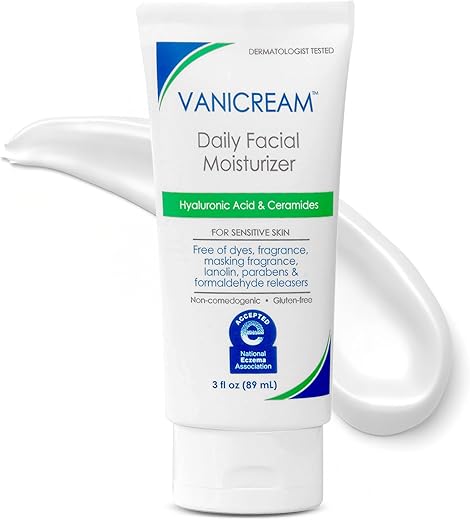
Vanicream Daily Facial Moisturizer: the gentlest option
Vanicream leaves out fragrance, dyes, lanolin, parabens, botanical extracts and essential oils. That makes it the safest pick when your skin stings from treatment.
It carries five ceramides and hyaluronic acid, and Vanicream labels it non-comedogenic. Squalane sits second on the list, so it feels richer than the gels here.
That extra cushion suits combination skin and treatment dryness. Very oily skin may find it too much in summer. Compare it with CeraVe in Vanicream vs. CeraVe.
Side by side
The table lines up texture and the ingredients that matter for oily, breakout-prone skin.
| Texture | Key ingredients | Fragrance-free | SPF | Best for | ||
|---|---|---|---|---|---|---|
| Light lotion | Niacinamide, 3 ceramides, hyaluronic acid | 1 | – | Acne skin on treatment | View | |
| Gel-cream | Niacinamide, ceramide NP, silica, perlite | 1 | – | Very oily skin | View | |
| Lotion | SPF 30 filters, silica, glycerin | 1 | 1 | Mornings in one step | View | |
| Water gel | Dimethicone, glycerin, hyaluronic acid | – | – | Humid weather, under makeup | View | |
| Light lotion, richer | 5 ceramides, squalane, hyaluronic acid | 1 | – | Sensitive or combination skin | View |
Match the pick to your skin
- You are on benzoyl peroxide, adapalene or a retinoid
Treatment dryness is a barrier problem. Ceramides and niacinamide help more than oil absorbers do here. If you use two treatments, see how to use Differin and PanOxyl together.
Look forCeramides with cholesterol, niacinamide, no fragrance.SkipMattifying powders on skin that already feels tight. - You are shiny by midday
Oil-absorbing powders like silica and perlite are what actually cut shine. Gels feel light, but they do not soak up oil.
Look forSilica or perlite in a gel-cream.SkipSqualane-rich or buttery creams. - Your skin stings or reacts easily
Short, fragrance-free formulas give you fewer things to react to.
Look forFragrance-free and no essential oils.SkipFragranced gels, even light ones. - You want fewer morning steps
An SPF moisturizer saves a step, but only if you apply a full amount. Otherwise a separate sunscreen protects better.
Look forBroad-spectrum SPF 30 or higher.SkipCounting on makeup SPF alone.
How to use it without clogging pores
Apply moisturizer to slightly damp skin after cleansing and any treatment. A pea-to-nickel amount covers most faces. If a treatment stings, apply moisturizer first and the treatment on top, or ask your dermatologist about buffering.
Patch-test a new product on one area for a week before using it everywhere. Then give it about four weeks before you judge it, since breakouts come and go on their own. A short guide to reading skincare ingredients makes comparing labels faster.
Frequently asked questions
Should I use moisturizer if my skin is oily and acne-prone?
Yes. Oily skin can still be dehydrated, and acne treatments like benzoyl peroxide and adapalene dry the skin further. A light, oil-free moisturizer helps you tolerate those treatments.
Is gel or lotion better for oily skin?
Both can work. Gels feel lightest, but they do not absorb oil. If shine is the problem, a gel-cream with silica or perlite helps more. If dryness from treatment is the problem, a light ceramide lotion helps more.
Does non-comedogenic mean a moisturizer won't cause acne?
No. It means the product was formulated to avoid clogging pores, and it is a useful filter. But there is no standard definition, and individual skin still varies, so patch-test new products.
Can I use a moisturizer with SPF instead of sunscreen?
Yes, if it is broad-spectrum SPF 30 or higher and you apply a full amount. Many people apply moisturizer thinly, so a separate sunscreen is often the more reliable option.
When should I apply moisturizer with acne treatment?
Usually after the treatment. If the treatment stings or peels your skin, applying moisturizer first and the treatment on top can soften it. Follow your prescriber’s directions for prescription products.
Start with CeraVe PM. It is light, fragrance-free and built around the barrier repair that acne treatments demand. Choose Toleriane Double Repair Matte if shine is your main problem, Cetaphil DermaControl SPF 30 if you want one morning step, and Vanicream if your skin reacts to almost everything.
The best moisturizer for oily acne-prone skin is the one that fixes your specific problem. Treatment dryness calls for ceramides and niacinamide. Midday shine calls for oil-absorbing powders. Reactive skin calls for the shortest fragrance-free formula you can find.
Whichever you choose, keep it consistent for a month, pair it with sunscreen in the morning, and change one product at a time.
