
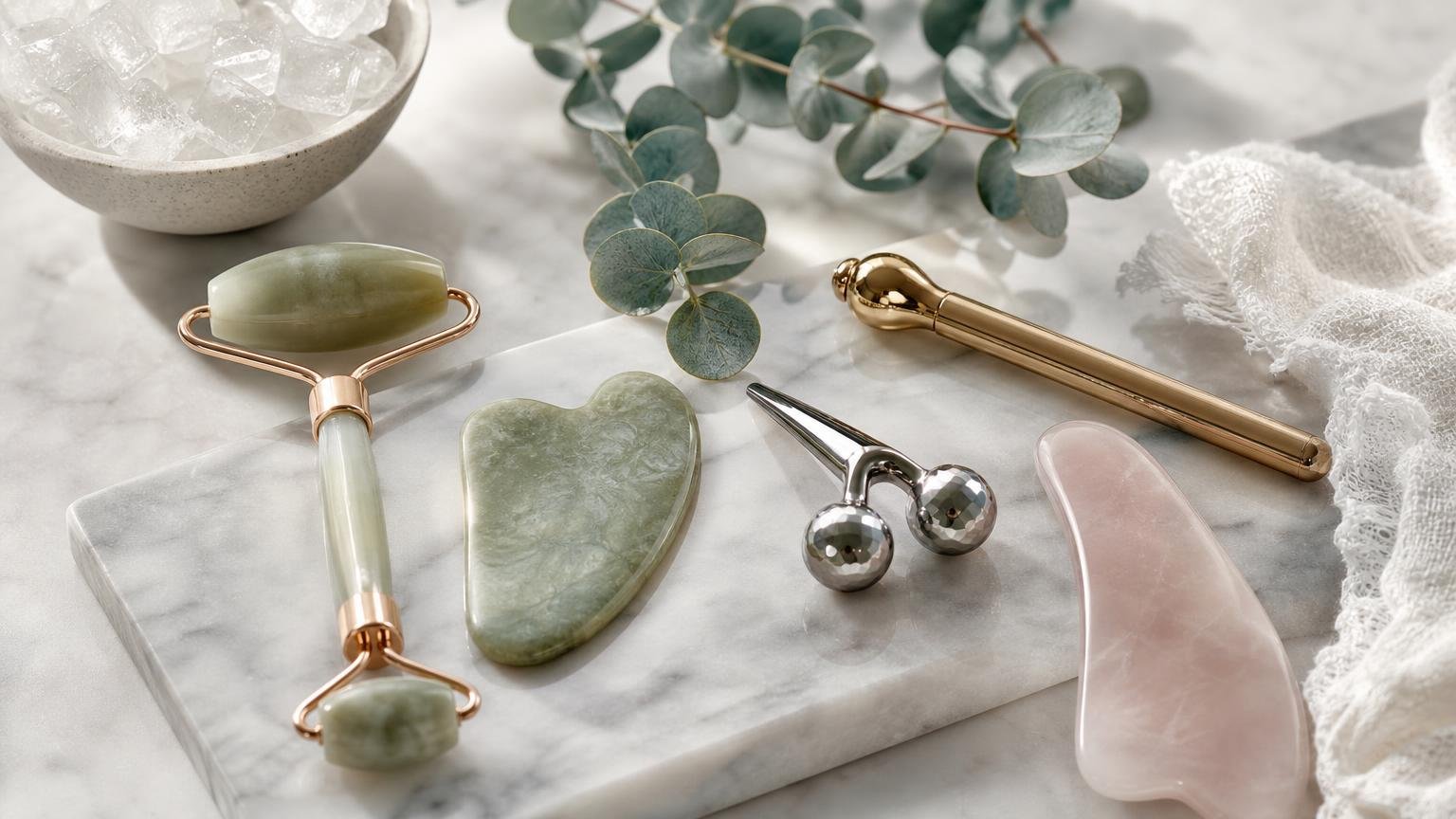
A sculpted jawline may last through breakfast, not through the week.
Morning puffiness can make the cheeks, eyelids, and jawline look less defined. Facial rollers, gua sha stones, and vibrating devices promise a quick fix, often using vague language about “detoxing” or reshaping the face. Those claims overstate what a handheld tool can plausibly do.
Gentle massage may temporarily shift superficial fluid and increase local circulation, making mild puffiness look less noticeable. It does not remove toxins, reduce facial fat, or permanently alter bone structure. The useful comparison is therefore not whether a tool “works,” but how visible the short-term change is, how long it lasts, and whether that modest effect justifies the cost and effort.
Not all facial puffiness is fluid
Temporary puffiness often reflects fluid shifting into superficial tissue, especially where skin is loose. Common contributors include high-sodium meals, alcohol, poor sleep, crying, seasonal allergies, hormonal changes, dehydration, and sleeping flat or face-down. Morning swelling that affects both sides and eases within several hours is more consistent with transient fluid retention.
Under-eye fullness is less straightforward. Fat pads, bone structure, skin laxity, and genetics can create permanent bulges or shadows that resemble swelling. Pigmentation and visible blood vessels may deepen the appearance of “bags” without adding volume. Massage cannot materially change these structural or pigment-related features, so an expensive tool is unlikely to justify its cost for that purpose.
Pattern matters more than the label. Diffuse, symmetrical puffiness that fluctuates differs from a fixed under-eye contour. Photos taken at the same time and in the same lighting can help show whether the change is temporary or stable.
Prompt professional assessment is appropriate for swelling that is sudden, one-sided, painful, red, warm, persistent, or repeatedly unexplained. Swelling with fever, vision changes, or a new medication also warrants review. Lip or tongue swelling, breathing difficulty, or trouble swallowing requires urgent care.
What facial massage can actually move
Facial tissues contain capillaries, lymphatic vessels, and spaces filled with interstitial fluid. Capillaries deliver fluid; most returns directly to circulation, while lymphatic vessels collect part of the remainder and return it to the bloodstream. Lymph nodes filter this fluid as part of immune function. They are not outlets for vaguely defined “toxins.”
Gentle, rhythmic pressure may shift a small amount of superficial fluid toward lymphatic channels or veins. That can make morning puffiness appear less pronounced for a few hours, particularly after fluid pools during sleep. Evidence for lasting contour change from rollers or gua sha remains limited. Temporary redness shows friction and widening surface vessels, not detoxification or improved long-term circulation.
Clinical manual lymphatic drainage is a specialized technique, not equivalent to forceful cosmetic scraping.
Harder scraping does not produce more drainage. Excess pressure can cause tenderness, bruising, visible capillaries, or irritation, especially under the eyes. Use light pressure, adequate slip, and slow strokes; stop if skin becomes painful or remains red.
Costly stone or vibrating tools are not well supported as superior to clean fingers. Their value is primarily convenience and ritual. Sudden, one-sided, painful, or persistent swelling warrants medical assessment rather than continued massage.
What the evidence actually supports
Research on ordinary rollers, gua sha tools, and vibrating massagers remains thin. Most studies are small, use different techniques, and measure immediate physiological changes rather than visible puffiness over weeks or months. Follow-up is often limited or absent.
A peer-reviewed study in Complementary Therapies in Medicine found that brief roller massage increased facial skin blood flow for several minutes. Its volunteer groups were very small, however, and blood flow is not the same outcome as reduced swelling, improved collagen, or lasting contour. The study does not establish that a retail tool performs better than massage with clean fingers.
Manual lymphatic drainage has somewhat more research behind it, particularly after facial surgery or in clinical management of swelling. Cleveland Clinic describes it as a specialized, gentle technique. Those controlled treatment settings do not closely match occasional cosmetic use on normal morning puffiness.
| Marketing claim | Evidence-based reading |
|---|---|
| Reduced puffiness | Temporary fluid redistribution is plausible, but strong consumer-tool trials are scarce. |
| Increased circulation | Short-lived changes have been measured; the visible cosmetic value is uncertain. |
| Increased collagen | Robust trials showing meaningful collagen gains from handheld tools are lacking. |
| Facial fat loss | Massage pressure does not selectively remove fat. |
| Permanent sculpting | No credible evidence shows lasting alteration of bone, fat pads, or facial structure. |
The practical conclusion is narrow: a cool, gently used tool may produce a brief de-puffing effect for some faces. Premium materials, vibration, magnets, or “detox” language do not overcome the evidence gap. A costly device is not worth the money when its main function can be replicated by light manual massage.
Does a face roller outperform clean fingers?
Are rollers more effective than finger massage?
Current evidence does not show that rollers move more fluid than clean fingers using similarly light pressure. Fingers also provide better feedback, making it easier to avoid painful or excessive force.
Why can a chilled roller seem more effective?
Cooling can temporarily constrict superficial blood vessels and reduce the appearance of swelling. That effect comes largely from temperature, not the rolling mechanism; a cool compress may produce a similar result.
Do jade and quartz improve the outcome?
There is no good evidence that jade, quartz, or other premium stones produce superior de-puffing. Material matters mainly for durability, ease of cleaning, weight, and how long the tool feels cool.
Is a face roller worth buying?
A basic roller can be a reasonable convenience if its shape makes gentle, consistent massage easier or more pleasant. Premium versions are generally not worth the added cost when the price rests on crystal type, detox claims, or permanent contouring promises.
What matters more than the tool?
Light pressure, short sessions, and clean contact surfaces matter more than material. Stop if rolling causes pain, persistent redness, or irritation.
How facial massage tools compare
The relevant question is not which tool promises the sharpest contour. It is which design delivers gentle, repeatable pressure or cooling without adding cost, irritation, or maintenance.
| Tool | Practical strengths | Main limitations | Evidence |
|---|---|---|---|
| Gua sha | Pressure and direction are easy to adjust. Broad edges cover the jaw and cheeks efficiently. | Technique-dependent. Thin stone can chip or break; dragging without slip may irritate skin. | Small studies suggest short-term changes in local circulation. Evidence for lasting sculpting is lacking. |
| Roller | Fast, intuitive, and naturally limits pressure. Metal rollers retain cold well. | Hinges can trap residue or squeak. Stone versions may crack after drops. | Temporary cooling and fluid redistribution are plausible; gemstones have no established advantage. |
| Vibrating tool | Requires little manual movement and may feel pleasant. | Motors add weight, charging, seams, and failure points. Vibration does not establish better drainage. | Device-specific evidence is sparse. Premium pricing is difficult to justify on de-puffing claims alone. |
| Cooling device | Cold may briefly narrow superficial blood vessels and reduce the appearance of swelling. | Excessive cold or prolonged contact can irritate skin. Glass globes carry breakage risk. | Cooling has a clearer short-term mechanism than claims about detoxification or facial reshaping. |
Cleaning favors simple, nonporous designs. Stainless steel and smooth resin are easier to wash and dry than hinged rollers or devices with charging ports. Tools should be cleaned after use and not shared.
For most buyers, clean fingers, a basic roller, or a smooth steel tool provide similar functional value. Motors, rare stones, and elaborate attachments are generally not worth the added cost when the supporting language centers on “drainage,” “detox,” or permanent sculpting.
Use less pressure than seems necessary
-
Start with clean skin and hands
Wash the face, hands, and tool before each session. Debris trapped beneath a tool can increase friction and irritation.
-
Apply enough slip
Use a plain, non-irritating moisturizer or gel. Add more if the tool drags, skips, or pulls the skin.
-
Keep pressure very light
The skin should move minimally. Firm scraping is not required to shift superficial fluid and may worsen redness.
-
Work slowly outward
Glide from the center of the face toward the ears. Around the eyes, stay on the orbital bone and avoid pressing the eyelids.
-
Finish down the neck
Move along the sides of the neck toward the collarbones. Avoid force over the front of the throat.
-
Wash and air-dry the tool
Clean reusable tools with mild soap and water unless the manufacturer specifies otherwise. Dry completely before storage.
Several slow passes are enough. More pressure does not produce a more durable result.
For slip: any plain, fragrance-free lotion or gel works. What matters is that the tool keeps gliding — when it starts to drag, add more product rather than more pressure, and stop if the skin stings.
Stop if massage causes pain, bruising, broken capillaries, or redness that persists. These signs indicate excessive pressure or friction.
Avoid massaging broken or actively irritated skin. Anyone with acne, eczema, or rosacea should ask a dermatologist whether facial massage is appropriate.
When facial massage should be skipped
Massage should stop when skin is broken, sunburned, actively irritated, or showing possible infection, such as spreading redness, warmth, tenderness, or drainage. Tools can add friction and may transfer microbes, even when cleaned.
Recent injections, surgery, laser treatment, chemical peels, microneedling, and other procedures require specific aftercare. The treating clinician’s instructions take priority over a tool routine. Manufacturer warnings and clinician-directed restrictions should also be followed.
Acne, eczema, and rosacea can respond poorly to pressure, heat, or repeated rubbing. Anyone managing these conditions should ask a dermatologist whether massage is appropriate and which products provide enough slip without aggravating the skin.
Skip massage and seek medical assessment for new, persistent, painful, rapidly worsening, or one-sided swelling, particularly after an injury or alongside fever. Swelling with difficulty breathing requires emergency care.
What matters in a facial massage tool
- Smooth contact surfaces
Edges, joins, and roller mounts should not scrape, catch, or pinch. Uneven pressure can turn a gentle routine into unnecessary irritation.
PrioritizeRounded edges, seamless contact points, and freely moving rollersSkipChips, burrs, sharp ridges, or loose hardware - Cleanable materials
Nonporous materials such as stainless steel are easier to wash and dry thoroughly. Elaborate textures create more places for residue to collect.
PrioritizeNonporous surfaces and minimal seamsSkipPorous stone, deep grooves, and enclosed crevices - Simple, comfortable construction
A balanced handle and useful shape matter more than magnets or decorative minerals. Added complexity has not shown better de-puffing results.
PrioritizeA secure grip and controllable pressureSkipHeavy attachments, aggressive ridges, and unsupported energy claims - Clear care and returns
Instructions should explain washing, drying, and storage. A useful return policy matters if the tool arrives rough, misaligned, or difficult to clean.
PrioritizeSpecific care directions and practical defect coverageSkipVague maintenance advice or restrictive returns
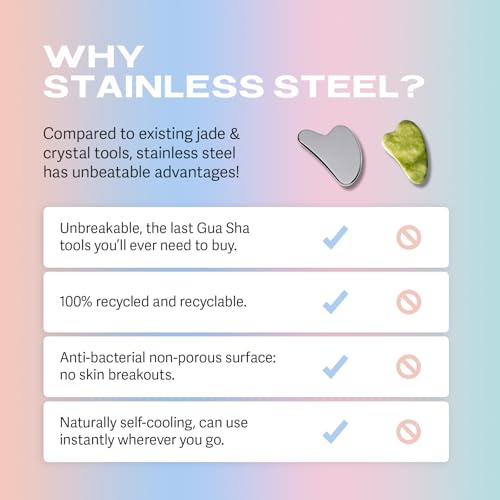
The Sacheu roller uses stainless steel, a nonporous material that tolerates routine washing better than porous stone. Two roller sizes may suit broader and smaller facial areas.
The listing does not show better de-puffing than clean fingers or a cool washcloth. Check that both rollers turn freely and that every edge feels seamless. The pouch aids storage, but the roller should be clean and dry before packing.
- Material
- Stainless steel
- Design
- Dual-sided roller
- Operation
- Manual
- Travel pouch
- Included
Temporary change is not the same as progress. How long skincare takes to work sets realistic timelines by ingredient, and the ice roller comparison covers the cooling tools most often credited with de-puffing.
Start with the simplest safe option
- Use clean fingers or a cool, not frozen, washcloth before buying a dedicated tool.
- Assess whether any visible change lasts long enough to matter.
- Choose a reusable tool only if its comfort, hygiene, or convenience improves the routine.
Premium minerals, magnets, and sculpting claims are not worth extra money for de-puffing. Evidence does not show that they outperform gentle massage and cooling.
If a tool still appeals, prioritize smooth stainless steel, simple construction, clear cleaning instructions, and a workable return policy. Stop using any tool that catches, pinches, or irritates the skin.
