
Your first retinoid should be one you can use for three months without quitting. Strength comes later.
Retinoids are among the best-studied ingredients for fine lines, rough texture and clogged pores. They also irritate more than almost anything else on the shelf, which is why so many first attempts end in a flaky week and a forgotten bottle.
So the five picks below are chosen for tolerance first. Each one is fragrance-free, each suits a different skin type, and one of them is not a retinol at all.
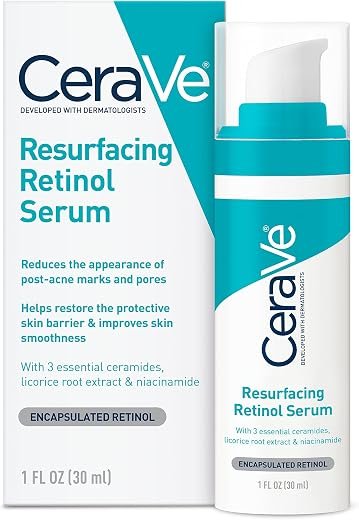
- CeraVe Resurfacing Retinol Serum is the best all-round first retinol.
- The Ordinary Retinol 0.2% is the pick if you want a stated strength and the lowest cost.
- Good Molecules suits sensitive skin; Olay suits dry or mature skin; Differin is for acne.
How we chose the best retinol for beginners
The best retinol for beginners is a low, gentle dose in a formula you will actually keep using. That sounds obvious, but most retinol marketing pushes the opposite: bigger numbers, faster results, more tingle.
We weighed four things. The retinoid type comes first, because it sets how strong the product acts. Then strength, where the label prints a percentage. Then the base, since a cream, an oil and a light serum suit different skin. Finally, fragrance, which is an easy irritant to avoid when your skin is already adjusting.
Five gentle first retinoids


The retinoid ladder, in plain terms
Your skin can only use vitamin A as retinoic acid. Every over-the-counter retinol, retinal or retinyl ester has to be converted first, and each conversion step makes the product gentler and slower.
- Retinyl esters (retinyl propionate, retinyl palmitate) sit at the bottom. They need the most conversion, so they are the mildest.
- Retinol is one rung up. It converts to retinal, then to retinoic acid.
- Retinal (retinaldehyde) is one step from the active form, so it works faster and irritates more.
- Adapalene is a separate category. It is a synthetic retinoid that acts directly, and it is approved as an acne treatment.
A 2006 review in Clinical Interventions in Aging describes the same chain. It also notes that retinol and retinal are considerably less irritating than prescription tretinoin. For a first retinoid, that gentleness is the point. For the next rung up, our guide to retinol vs. retinal covers when to step up, and retinol vs. bakuchiol covers the plant-based alternative.
Why so many labels skip the percentage
Only two of our five picks state a strength. The rest describe a "retinol complex" or simply list retinol in the ingredients. That is normal for drugstore brands, and it is not a red flag on its own.
The American Academy of Dermatology advises starting with the least intense formula you can find. When the percentage is missing, it says to go with the lowest strength on offer. Placement in the ingredient list helps a little, because ingredients are listed roughly by amount. But delivery matters as much as dose. Encapsulated retinol, like CeraVe's, releases slowly, so it tends to feel gentler than the same amount applied raw.


Our five picks, up close
Each pick below says who it suits and who should skip it. Prices move often, so the cards show the current one.
CeraVe Resurfacing Retinol Serum: the easiest first step
01
Encapsulated retinol, niacinamide and three ceramides
CeraVe wraps its retinol in an encapsulated delivery system, so it releases gradually rather than all at once. The formula also carries niacinamide, a licorice-derived ingredient and three ceramides that support the skin barrier. That combination is why it suits so many first-timers.
Buy it if your skin is normal, combination or oily, or you mainly want to fade post-acne marks. Skip it if you want to know your exact dose, because CeraVe does not publish the retinol percentage. Very dry skin will still want a moisturizer on top.
The Ordinary Retinol 0.2%: a known dose at the lowest cost
0.2% retinol in squalane, caprylic/capric triglyceride and jojoba oil
The Ordinary states its strength on the bottle, which makes it easy to step up later within the same range. The base has no water, so the retinol stays stable, and it leaves a slippery, oil-like finish that dry skin tends to like.
Buy it if you want the most transparent option and the lowest cost. Skip it if your skin is very oily and hates any slip, or you want a single product that also moisturizes. A few drops cover the whole face.
Good Molecules Gentle Retinol Cream: the softest landing
0.1% retinol plus bakuchiol in a night cream
At 0.1%, this is half The Ordinary’s dose, and it comes in a cream rather than a serum. Bakuchiol adds a smoothing effect without being a retinoid itself. Because the base already moisturizes, most nights it is the only step you need.
Buy it if your skin flushes, stings or flakes easily. Skip it if your skin is oily and dislikes creams, or you already tolerate retinol well and want more.
Olay Retinol 24: treatment and moisturizer in one
Retinol, retinyl propionate, niacinamide and peptides
Olay pairs retinol with retinyl propionate, a milder ester further down the ladder. The rest is a silicone-rich moisturizer with niacinamide and peptides, so it feels smooth and cushioned on dry skin. Olay does not publish a retinol percentage.
Buy it if your skin is dry or mature and you prefer one jar at night. Skip it if you are acne-prone and want a lighter texture, or you want a stated strength. Our Olay vs. RoC comparison covers it in more depth.
Differin Gel: when breakouts are the real problem
A prescription-strength acne retinoid, now sold over the counter
Differin is not a retinol. It contains adapalene, a synthetic retinoid that the FDA approved for over-the-counter acne treatment in 2016, as Galderma announced at the time. It works directly on clogged pores rather than waiting to be converted.
Buy it if your main goal is fewer breakouts. Skip it if your skin is dry or sensitive and acne is not the issue, because the gel base can be drying. Our Differin vs. CeraVe comparison explains when each makes sense.
Best overall CeraVe | Best value The Ordinary | Sensitive skin Good Molecules | Dry or mature Olay Retinol 24 | Acne-prone Differin | |
|---|---|---|---|---|---|
|
|
|
|
|
| |
| Retinoid type | Encapsulated retinol | Retinol | Retinol | Retinol + retinyl ester | Adapalene |
| Strength listed | Not disclosed | 0.2% | 0.1% | Not disclosed | 0.1% |
| Supporting ingredients | Niacinamide, ceramides | Squalane, jojoba oil | Bakuchiol, plant oils | Niacinamide, peptides | None notable |
| Fragrance-free | Yes | Yes | Yes | Yes | Yes |
| Best for | Most skin types | Normal to dry | Sensitive | Dry or mature | Acne-prone |
| Check it | Check it | Check it | Check it | Check it |
Which one fits your skin
Skin type decides more than brand does, so start here. One caution first: the AAD notes that very red, inflamed or allergic skin may not be a good fit for retinoids at all. If that sounds like you, check with a dermatologist before buying anything.
Match the formula to your skin
- Sensitive or reactive skin
Start with the lowest dose in a cushioning base. Good Molecules Gentle Retinol Cream fits, and you can apply moisturizer first to soften it further.
Your pickGood Molecules Gentle Retinol CreamSkipRetinal, adapalene or anything fragranced - Dry skin
Pick a richer base so the retinoid does not strip you further. Olay Retinol 24 or The Ordinary’s squalane serum both suit dry skin.
Your pickOlay Retinol 24 or The Ordinary 0.2%SkipDrying gels - Oily or acne-prone skin
CeraVe’s light serum suits oily skin and post-acne marks. If active breakouts are the main issue, Differin targets them directly.
Your pickCeraVe Resurfacing Retinol or DifferinSkipHeavy creams and oil bases - Mature skin with fine lines
A moisturizing retinoid you will use nightly beats a stronger one you pause. Olay Retinol 24 is the simplest; move to retinal once retinol feels easy.
Your pickOlay Retinol 24, then retinal laterSkipJumping straight to a high strength
How to start without wrecking your skin barrier
Slow is the whole trick. The AAD recommends using a retinoid every other night at first and building up gradually, because starting too strong is what leads to irritation. The schedule below is a common, conservative version of that advice.
A four-week ramp-up for your first retinoid
- Patch test first
Apply a little along your jawline for a few evenings before using it on your whole face. Our patch-testing guide walks through it.
- Weeks 1 and 2: two nights a week
Use it on two non-consecutive nights, such as Monday and Thursday. A pea-sized amount covers the whole face.
- Weeks 3 and 4: every other night
If your skin stays comfortable, move to alternate nights. If it does not, stay where you are for another two weeks.
- After that: nightly, if your skin agrees
Nightly use is the goal, not a requirement. Plenty of people get good results at three or four nights a week.
- Apply to dry skin and avoid thin areas
Wait until your face is fully dry after cleansing. Keep it away from the corners of your eyes, nose and mouth.
- Sandwich it if it stings
Put a plain moisturizer on first, then the retinoid, then a little more moisturizer. This buffers the dose without stopping it working.
- Pause other actives
Do not start a retinoid in the same weeks as a new exfoliating acid. When you add them back, alternate nights; our guides on layering acids and azelaic acid cover the details.
- Wear sunscreen every morning
Retinoids make skin more sensitive to the sun, so use them at night and wear a broad-spectrum SPF 30 or higher during the day.
Give any retinoid about three months of regular use before judging whether it works.
Retinization or a real reaction?
Some dryness, flaking and mild redness in the first few weeks is expected. Dermatologists call it the retinoid reaction. The review linked above describes it as itching, burning, redness and peeling that usually appears within the first few weeks and then settles.
But persistent burning, swelling or a rash that spreads is not adjustment. Stop, let your skin recover, and restart at a lower frequency or a gentler product. If it happens again, see a dermatologist. The AAD also notes that irritation can leave dark marks on deeper skin tones, which is another reason to go slowly.
The AAD’s pregnancy skin care guidance says retinoids should not be used during pregnancy, and it names over-the-counter retinol and adapalene alongside prescription products. Skip every product on this list, and ask your obstetrician or dermatologist what to use instead, including while breastfeeding.
Frequently asked questions
What strength of retinol should a beginner start with?
The lowest you can find. Where a percentage is listed, 0.1% to 0.2% retinol is a sensible start. Many drugstore products do not print a percentage, so judge them by the base and how your skin responds.
Can I use retinol every night from the start?
It is better not to. Start two or three nights a week and build up over a month. Jumping to nightly use is the most common reason beginners give up.
Is Differin the same as retinol?
No. Differin contains adapalene, a synthetic retinoid approved as an acne treatment. It acts directly on pores, while retinol has to be converted by the skin first. Pick Differin for breakouts and a retinol for texture and fine lines.
Should I put moisturizer before or after retinol?
Usually after. If your skin stings, apply a thin layer of moisturizer before the retinoid as well. That buffer softens the dose.
Can I use retinol with niacinamide or vitamin C?
Niacinamide pairs well with retinol, and several picks here already include it. Vitamin C is easiest to keep in your morning routine while retinol stays at night.
How long does retinol take to work?
Texture often improves within a few weeks. Fine lines and dark marks take longer, so give it about three months of consistent use.
For most people, CeraVe Resurfacing Retinol Serum is the best retinol for beginners. Slow-release retinol, barrier-supporting ceramides and a light texture make it easy to keep using. Choose The Ordinary for a stated dose, Good Molecules for sensitive skin, Olay for dry skin, and Differin for acne.
Gentle first, strong later
- Most skin: CeraVe Resurfacing Retinol Serum.
- Want a stated strength: The Ordinary Retinol 0.2%.
- Sensitive skin: Good Molecules. Dry or mature skin: Olay Retinol 24. Breakouts: Differin.
A first retinoid is a test of tolerance, not a race. Pick the formula that matches your skin, start two nights a week, and wear sunscreen every morning. After three months, decide whether to stay put or step up to retinal.
