
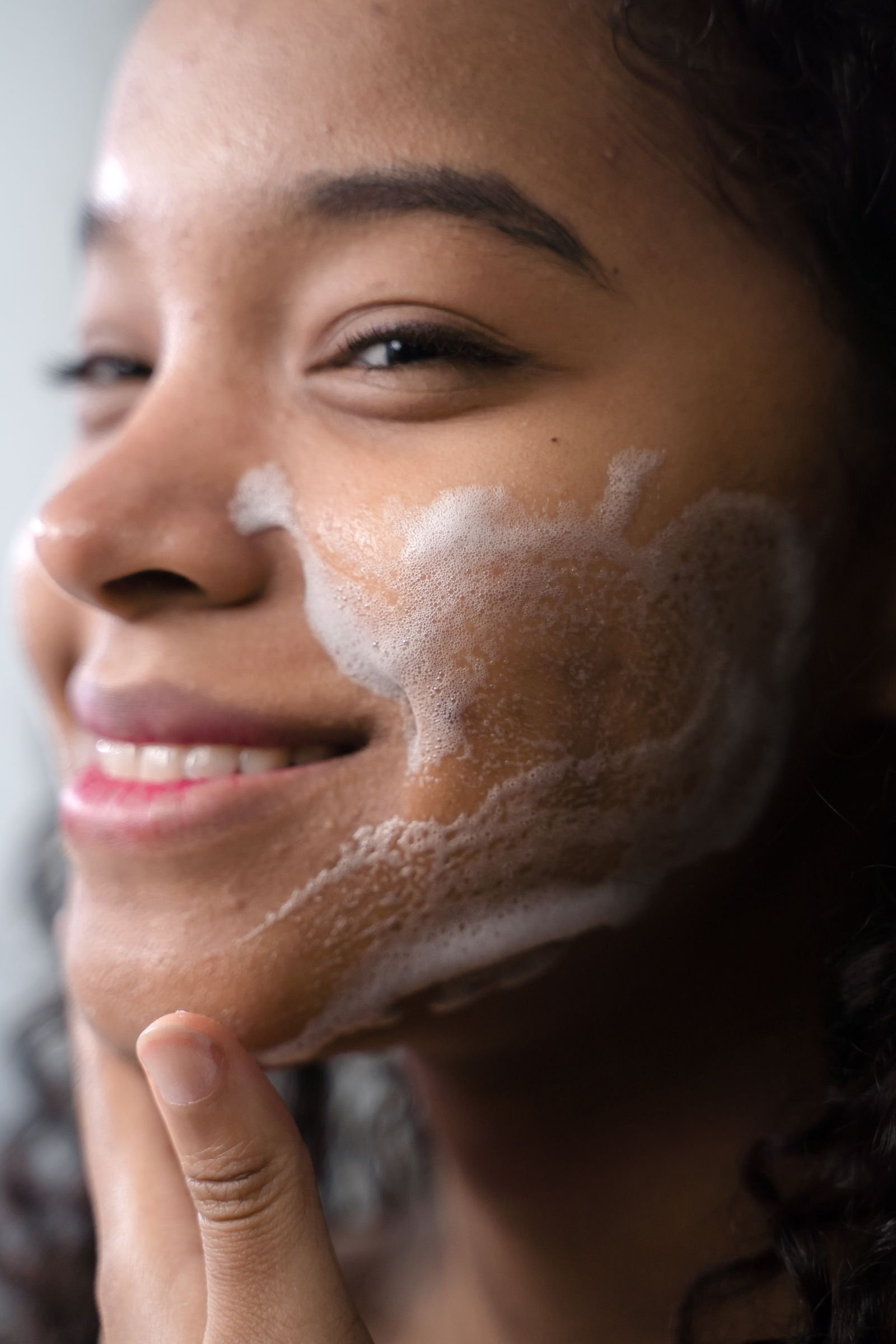
A brief tingle may be tolerable; escalating discomfort is a reason to reassess.
A cleanser feels cool for ten seconds, then the sensation fades with no redness. Another burns longer, leaves tightness, or causes swelling. Sensation alone cannot identify an allergy, barrier damage, or a specific skin condition. Timing, visible changes, and recurrence provide more useful signals.
For mild, brief stinging, first reduce contact time, use lukewarm water, and stop scrubbing. If irritation continues, a simpler fragrance-free, non-active formula is the more rational choice. Discontinue an active cleanser containing acids or benzoyl peroxide if burning persists, and patch-test actives on a small area according to label directions before wider use. Patch testing does not rule out allergy. Prompt medical care is appropriate for facial swelling, blistering, widespread rash, breathing difficulty, or eye involvement; persistent reactions warrant evaluation by a dermatologist.
Read the pattern before the label
Stinging intensity alone provides little diagnostic value. Onset, location, and what touched the skin beforehand offer more useful clues.
| Pattern | Plausible factors | First response |
|---|---|---|
| Immediate, diffuse sting | Hot water, long contact time, strong surfactants, recent shaving, exfoliation, or sun exposure | Rinse with lukewarm water. Pause exfoliants and shorten cleansing time. |
| Burning near the eyes | Cleanser migration, fragrance, or eye makeup residue | Keep cleanser outside the orbital area and rinse thoroughly. |
| Tightness after rinsing | Overcleansing, hot water, or a formula that removes too much surface oil | Reduce cleansing frequency and use a plain moisturizer afterward. |
| Itching that develops later | Fragrance, preservatives, botanical extracts, or a concurrent leave-on product | Stop the newest product and reintroduce products individually. |
Context can change tolerance. A familiar cleanser may sting after shaving, exfoliation, prolonged sun exposure, or use alongside retinoids, acids, vitamin C, or benzoyl peroxide. Patch-test active products on a small area before broader use, and avoid introducing several new formulas at once.
Stop the suspected product if burning persists or visible swelling, blistering, or marked redness develops. A dermatologist can assess recurrent or worsening reactions.
When cleansing removes too much
Surfactants surround oil, sunscreen, and debris so water can rinse them away. The same process can remove some surface lipids and interact with skin proteins. Dryness and stinging become more likely when the cleanser is concentrated, washing is frequent, or lather remains on the skin for too long.
Why “sulfate-free” says little
A sulfate-free label does not establish mildness. Alternative surfactants can still irritate at high concentrations, while carefully blended sulfate systems may be less disruptive than the ingredient name suggests. Surfactant concentration, the combination used, pH, contact time, and conditioning ingredients provide more useful evidence.
Foam is also an imperfect measure of cleansing strength. Still, dense, persistent lather often encourages longer washing and may indicate a formula designed for stronger oil removal. Added fragrance, exfoliating acids, or limited humectants can further reduce tolerance.
For skin that stings after washing, a practical reset is:
- Choose a mild low-foam lotion, gel, or cream cleanser.
- Use lukewarm water and cleanse briefly, without brushes or scrubs.
- Wash only as often as needed to remove sunscreen, makeup, sweat, and excess oil.
- Apply a plain moisturizer soon afterward.
The American Academy of Dermatology advises gentle, nonabrasive cleansing. A costly sulfate-free cleanser is not worth the premium when its full ingredient list still suggests aggressive cleansing or unnecessary fragrance.
Why skin feels squeaky after washing
A squeaky finish is often mistaken for thorough cleansing. More often, it signals high friction at the wet skin surface or substantial removal of surface lipids. Tightness or stinging that becomes clearer after towel drying may reflect the same process; evaporation and rubbing can make an already stressed surface feel worse.
Alkalinity can contribute because higher-pH cleansing may temporarily alter the skin surface environment. It is not a complete explanation, however. Whether face-wash pH affects gentleness depends on the finished formula’s measured pH, surfactant system, concentration, and rinse-off behavior—not “pH-balanced” marketing alone.
Technique can raise exposure even when the cleanser looks mild on paper:
- Hot water can increase lipid removal and flushing.
- Forceful massaging, washcloths, and rough towels add friction.
- Extra product increases the surfactant dose without necessarily improving cleansing.
- Long contact time gives the formula more opportunity to interact with skin.
- Repeated cleansing is difficult to justify unless sunscreen, heavy makeup, or another resistant film remains.
To isolate the cause, use lukewarm water, a small amount of cleanser, fingertips, a short wash, and gentle patting for several days. Cleanse only as often as needed. If discomfort continues, a lower-foaming, fragrance-free formula may be a more rational purchase than another product marketed around foam or “deep cleaning.” Persistent pain, swelling, cracking, or a rash warrants assessment by a dermatologist.
When burning stays in one spot
Eyelids, eye corners, nostril folds, and cracked patches are unusually vulnerable. Cleanser can migrate into these areas during rinsing or remain along the hairline and nose. Thin or disrupted skin also permits ingredients to reach sensory nerves more readily.
Common aggravators include:
- Fragrance and aromatic oils, especially near the eyes
- Exfoliating acids, including salicylic, glycolic, and lactic acid
- Cooling agents such as menthol, peppermint, or eucalyptus
- Scrubs, cleansing brushes, and washcloth friction
- Incomplete rinsing or cleanser applied to dry, cracked skin
A smaller dose, lukewarm water, shorter contact time, and careful rinsing can isolate a usage problem. Acid-containing cleansers should be patch-tested as directed on a small area, rinsed off, and monitored for 24–48 hours before broader use.
When redness or itching appears later
Redness, itching, scaling, or swelling that develops hours later may reflect irritation or sensitization, but timing alone cannot identify an allergy. Repeated exposure matters. Possible contributors include fragrance mixtures, essential oils, botanical extracts, certain surfactants, and preservatives.
Preservatives should not be treated as inherently undesirable. They limit microbial growth in water-based cleansers; removing them without an adequate preservation system can make a formula less safe. The relevant question is whether a specific ingredient repeatedly corresponds with symptoms.
Fragrance-free generally indicates no added fragrance materials, though the ingredient list still deserves review. Unscented means the product lacks a noticeable smell and may include masking fragrance. Neither term is a federal guarantee of suitability for sensitive skin.
Persistent or worsening redness, itching, swelling, or eyelid involvement warrants evaluation by a dermatologist, who can determine whether formal patch testing is appropriate.
When the rest of the routine changes
A cleanser may remain unchanged while the skin around it does not. Salicylic acid, AHAs, benzoyl peroxide, and retinoids can contribute to dryness or irritation. Combining them, or using them too frequently, increases the cumulative burden. Low-pH vitamin C may also sting compromised skin, even when the cleanser previously felt neutral.
Shaving can create small surface disruptions. Recent sun exposure and already-red, flaky, or tight skin can further reduce tolerance. In these settings, cleanser contact may reveal existing irritation rather than identify the cleanser as the sole cause.
For wash-off actives, follow the labeled contact time rather than leaving the formula on longer. More tingling does not indicate better performance. When troubleshooting, pause one suspect variable at a time while keeping water temperature, washing frequency, and cleanser dose consistent.
Before restarting an active, test it cautiously on a small area and monitor for delayed redness or itching. Patch testing cannot predict every reaction, but it limits the area exposed. Anyone managing ongoing acne, eczema, rosacea, or another skin condition should see a dermatologist for individualized guidance.
A stronger sensation may reflect acidity, barrier disruption, or excessive exposure. It does not show that an active is working better. Persistent burning is a reason to rinse and reassess the routine.
Signals that matter more than price
- A restrained cleansing system
Intended skin type and the complete surfactant blend are more informative than “sulfate-free” claims. Mild surfactants can still sting when concentrated or used too long.
Look forShort contact times, clear dosing directions, and formulas positioned for dry or sensitive skin.Be cautious withHarsh cleansing claims, oversized doses, and instructions that encourage prolonged contact. - No unnecessary sensitizing extras
Fragrance and exfoliating acids add little to basic cleansing when stinging is the concern. An active cleanser should be patch-tested before broader use.
Look forFragrance-free formulas without AHAs, BHAs, retinoids, vitamin C, or benzoyl peroxide unless specifically needed.Be cautious withFragrance, essential oils, and multiple exfoliating actives in a daily cleanser. - Supportive ingredients in perspective
Glycerin, ceramides, and similar ingredients may make a formula more skin-compatible, but brief rinse-off contact limits their role. They cannot compensate for an aggressive surfactant system.
Look forHumectants and lipids paired with mild cleansing agents.Be cautious withPaying a large premium for barrier-focused marketing unsupported by the full formula. - Practical packaging
A pump or controlled-opening tube can reduce overdosing and water entry. Legible directions also matter when contact time affects tolerance.
Look forControlled dispensing and explicit use instructions.Be cautious withWide openings, vague dosing, or packaging that invites water contamination.
Assessments rely on published ingredient lists, product specifications, manufacturer disclosures, established ingredient functions, and recurring patterns in attributed user reviews. No judgment represents hands-on testing.
-
Formula first
The surfactant blend, fragrance status, added actives, and intended skin type receive more weight than price or front-label claims.
-
Claims kept proportional
Rinse-off moisturizers receive limited credit because contact is brief. Packaging and directions are considered where they affect dose, hygiene, or exposure time.
Simplify before testing again
-
Stop the suspected cleanser
Repeated burning is sufficient reason not to challenge the formula again.
-
Let discomfort settle
Pause exfoliating acids, retinoids, benzoyl peroxide, vitamin C, scrubs, and other optional actives.
-
Test one simpler cleanser
Choose a fragrance-free formula without exfoliating actives. Use lukewarm water, a small amount, brief contact, and no scrubbing.
-
Change one variable
Keep the rest of the routine stable. Patch-test actives before reintroducing them individually.
-
Log the pattern
Record timing, location, cleansing frequency, active products, visible changes, and whether the reaction repeats.
A simpler routine makes the likely trigger easier to identify. Do not retry a cleanser that repeatedly burns. Persistent stinging, rash-like changes, swelling, or symptoms that remain after simplification warrant evaluation by a dermatologist.
