
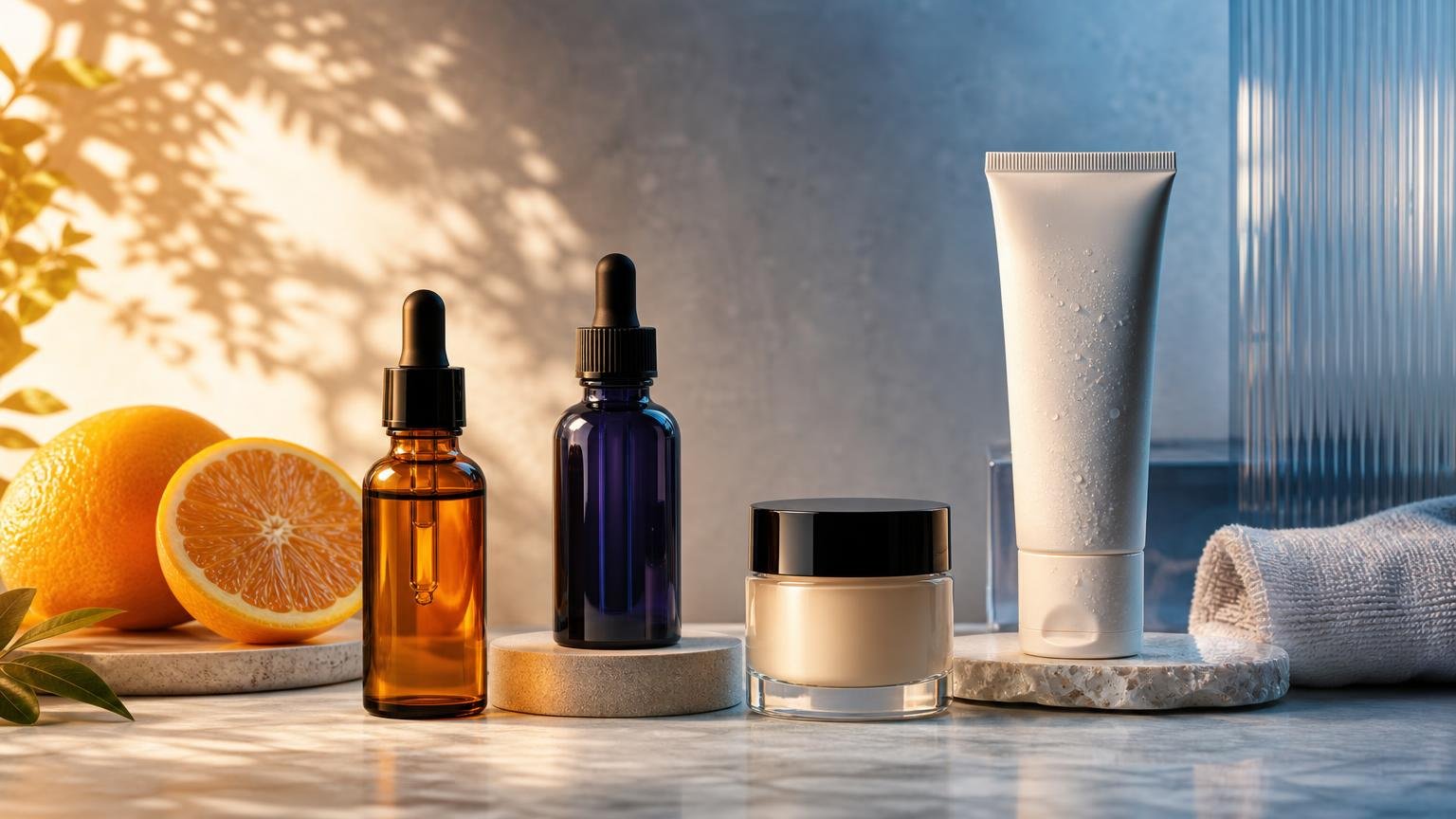
A costly formula can degrade as quietly as a budget one.
A sunscreen left in a hot car, a retinol serum stored beside a steamy shower, or vitamin C sitting on a sunny vanity may become less reliable before its color, odor, or texture changes. The FDA advises protecting sunscreen from excessive heat and direct sunlight. Retinol and vitamin C also warrant close attention to label directions because light, oxygen, and temperature affect formulations differently.
Price and “fresh” marketing do not establish stability. Opaque, tightly sealed packaging may matter more, as can the product’s shipping and storage history before purchase. Refrigeration is not a universal safeguard: cold can thicken or separate some emulsions, while repeated removal may introduce condensation. Unless the manufacturer specifies refrigeration, a consistently cool, dry, dark cabinet is generally the more defensible choice. New active products should still be patch-tested on a small area according to label directions before broader use.
How to store skincare products matters most for the actives that degrade quietly: vitamin C, retinol, and sunscreen.
Use one stable storage location
-
Choose a cool, dry cabinet
An interior bedroom or hallway cabinet usually has smaller temperature and humidity swings than a bathroom. A drawer also works if it stays dry.
-
Exclude common hot spots
Keep products away from sunny vanities, windowsills, radiators, heating vents, and parked cars. A closed car can heat rapidly even when outdoor temperatures seem moderate.
-
Retain the original packaging
Opaque bottles, air-restrictive pumps, caps, and cartons can limit light and air exposure. Transferring formulas into decorative jars may remove those protections and introduce contamination.
-
Close and return products promptly
Replace caps firmly after each use, then return each item to the same cabinet. Avoid leaving vitamin C, retinol, or sunscreen on a damp counter.
-
Follow the product label
Label directions take priority over general storage rules. Refrigeration is not automatically beneficial; use it only when the manufacturer specifically recommends it.
Storage cannot predict skin tolerance. Before regular use, apply a small amount of a new vitamin C or retinoid formula to a limited area as directed, then monitor for irritation. Stop use if a significant reaction occurs.
Vitamin C needs a form-specific check
L-ascorbic acid is the form most vulnerable to oxygen, light, and heat, particularly when dissolved in water. Formulation research describes its oxidation to dehydroascorbic acid and later breakdown products. Repeated air exposure and warm storage can accelerate this process.
Packaging and vehicle therefore matter. Opaque, air-restrictive pumps generally offer more protection than clear dropper bottles, though no dispenser eliminates oxygen exposure. Water-free formulas and derivatives such as sodium ascorbyl phosphate, magnesium ascorbyl phosphate, and tetrahexyldecyl ascorbate are generally more stable, but they are not interchangeable with L-ascorbic acid; skin conversion and supporting evidence differ.
A faint yellow tint is not automatic proof of oxidation. Ferulic acid, botanical extracts, oils, or the formula’s original color may account for it. The useful comparison is the product’s appearance when first opened, supported by manufacturer guidance. Progressive darkening toward orange or brown is more concerning, especially when accompanied by a new odor, separation, thinning, thickening, crystallization, or a malfunctioning closure.
Refrigeration is not routinely required. It may slow degradation in some water-based formulas, but label directions take priority. Condensation, repeated temperature swings, or thickening can make cold storage counterproductive.
-
Record the starting condition
Note the initial color, odor, and consistency under neutral light.
-
Inspect the package
Check for a loose cap, clogged pump, leaking dropper, or excess air entering the container.
-
Track change, not tint alone
Gradual orange-brown darkening plus odor or texture changes provides stronger evidence than pale yellow color.
-
Replace a clearly degraded formula
A substantially darkened or separated L-ascorbic acid serum is unlikely to justify continued use.
Patch-test a new vitamin C formula on a small area before broader use, following label directions.
Retinol needs protection from light and air
Light can trigger photodegradation, while oxygen can oxidize retinol and reduce the amount remaining in a formula. A product may lose potency without developing an obvious color or odor change.
Stability varies with the retinoid derivative, concentration, vehicle, antioxidants, and encapsulation system. Encapsulation may slow exposure, but it does not make poor storage irrelevant. Published stability research generally supports minimizing heat, light, and repeated air contact.
Packaging provides a practical screening tool:
- Favor opaque or UV-limiting containers.
- Airless pumps or narrow tubes generally limit oxygen exposure better than wide-mouth jars.
- Keep the cap closed and store the product in a cool, dry cabinet.
- Do not decant retinoids into clear travel jars unless the manufacturer specifically permits it.
A premium price does not compensate for transparent, air-exposing packaging when the formula lacks a documented stabilization strategy.
Stinging, peeling, and redness indicate poor tolerance, not that a retinoid is fresh or effective. Patch-test first, introduce one active at a time, and begin with infrequent nighttime use. The American Academy of Dermatology advises sun protection because retinoids can increase skin sensitivity. Persistent or severe irritation warrants stopping use and consulting a dermatologist.
Keep sunscreen out of hot cars
The FDA advises protecting sunscreen containers from excessive heat and direct sun. Product labeling should take priority when it gives a specific temperature range or storage instruction. A glove compartment, center console, or trunk is a poor long-term location because parked-car temperatures can rise well above outdoor temperatures.
For daily use, keep sunscreen in a bag that returns indoors. At the beach or pool, place it in shade, wrap it in a towel, or keep it in a cooler without direct contact with ice. An insulated pouch may slow warming during transit, but it does not make all-day car storage reliable.
Use the printed expiration date where provided. The FDA states that sunscreen without a date should generally be considered expired three years after purchase, but that assumes appropriate storage. Writing the purchase date on the package makes this rule easier to apply.
Replace sunscreen earlier if the formula develops separation, clumps, thinning, discoloration, an unusual odor, or a changed texture. These signs can indicate instability. Their absence, however, cannot confirm that labeled protection remains intact after repeated heat exposure. A new sunscreen can be patch tested on a small area before routine use to check for irritation, following label directions.
Expiration dates and visual checks are screening tools, not potency tests. If a tube has spent days in a hot vehicle or its storage history is unknown, replacement is more defensible than relying on normal color and texture.
Track the usable life after opening
-
Separate expiration from time after opening
An expiration date generally applies to unopened product stored as directed. Once opened, air, handling, and moisture can shorten reliability.
-
Check the period-after-opening symbol
A jar icon marked “6M” or “12M” indicates the manufacturer’s intended months of use after opening. If absent, follow the labeled expiration date and storage instructions.
-
Mark the opening month
Write the month on the bottle or record it with the routine. Memory is a poor substitute for a dated reference.
-
Inspect the package
Cracked caps, loose pump seals, clogged nozzles, or warped containers can increase exposure or prevent consistent dispensing. Sunscreen appearance alone cannot confirm protection.
-
Discard questionable product
Unexpected odor, separation, mold, debris, or repeated direct contact with the applicator raises contamination concerns. Patch-test active formulas after a long break or formulation change, and stop if significant irritation occurs.
Keeping an expensive formula past its supported use period does not preserve its value. When the opening date, storage history, or package integrity is uncertain, replacement is the more defensible choice.
Choose packaging and volume that protect the formula
- Protective packaging
Container design matters more than luxury materials. Opaque, air-restrictive pumps generally limit repeated light and oxygen exposure better than clear jars.
Look forOpaque tubes, pumps, narrow openings, and secure capsAvoidClear jars, wide openings, loose caps, and decorative decanting - Realistic volume
A larger bottle offers little value if potency becomes uncertain before it is finished. Expected application frequency should determine size.
Look forA volume likely to be used within the labeled periodAvoidBulk sizes chosen only for a lower cost per ounce - Traceable dating
Expiration dates, lot codes, and period-after-opening symbols support better replacement decisions. Missing or unreadable markings shift the risk to the buyer.
Look forLegible dates, batch codes, and opening-life instructionsAvoidUnmarked packaging or codes that disappear with handling - Specific stability details
Terms such as “fresh,” “stabilized,” and “medical grade” do not explain oxidation control. A premium is not worth paying when the ingredient form, package, and storage instructions remain vague.
Look forNamed ingredient forms, concentrations, packaging rationale, and storage directionsAvoidUnsupported stability language and prestige positioning
A small-area patch test is prudent before broader use of vitamin C or retinoids, following label directions and allowing time to observe irritation. A smaller package may waste less if the formula proves unsuitable. Persistent or severe reactions warrant guidance from a dermatologist.
A normal appearance does not erase a poor storage history, particularly for sunscreen left in a hot car.
Storage matters most for the formulas that take the most care to choose. How to choose mineral sunscreen for your face covers the filters, and retinol vs. bakuchiol for beginners covers the retinoid decision.
Preserve confidence, not compromised formulas
- Check manufacturer instructions and expiration or period-after-opening guidance first.
- Review heat, light, humidity, and air exposure next, then inspect the package and formula.
- Patch-test a fresh active on a small area according to label directions before broader application.
Good storage slows avoidable degradation. It cannot restore a formula after suspected oxidation, contamination, package failure, or excessive heat exposure. When evidence conflicts, the label and known storage history carry more weight than appearance alone.
Replacing a questionable product may waste some remaining formula, but continuing to use it offers uncertain performance. Refrigerators, cosmetic coolers, and storage accessories are not worth the money unless the manufacturer recommends that temperature range or the room routinely exceeds label guidance.
