
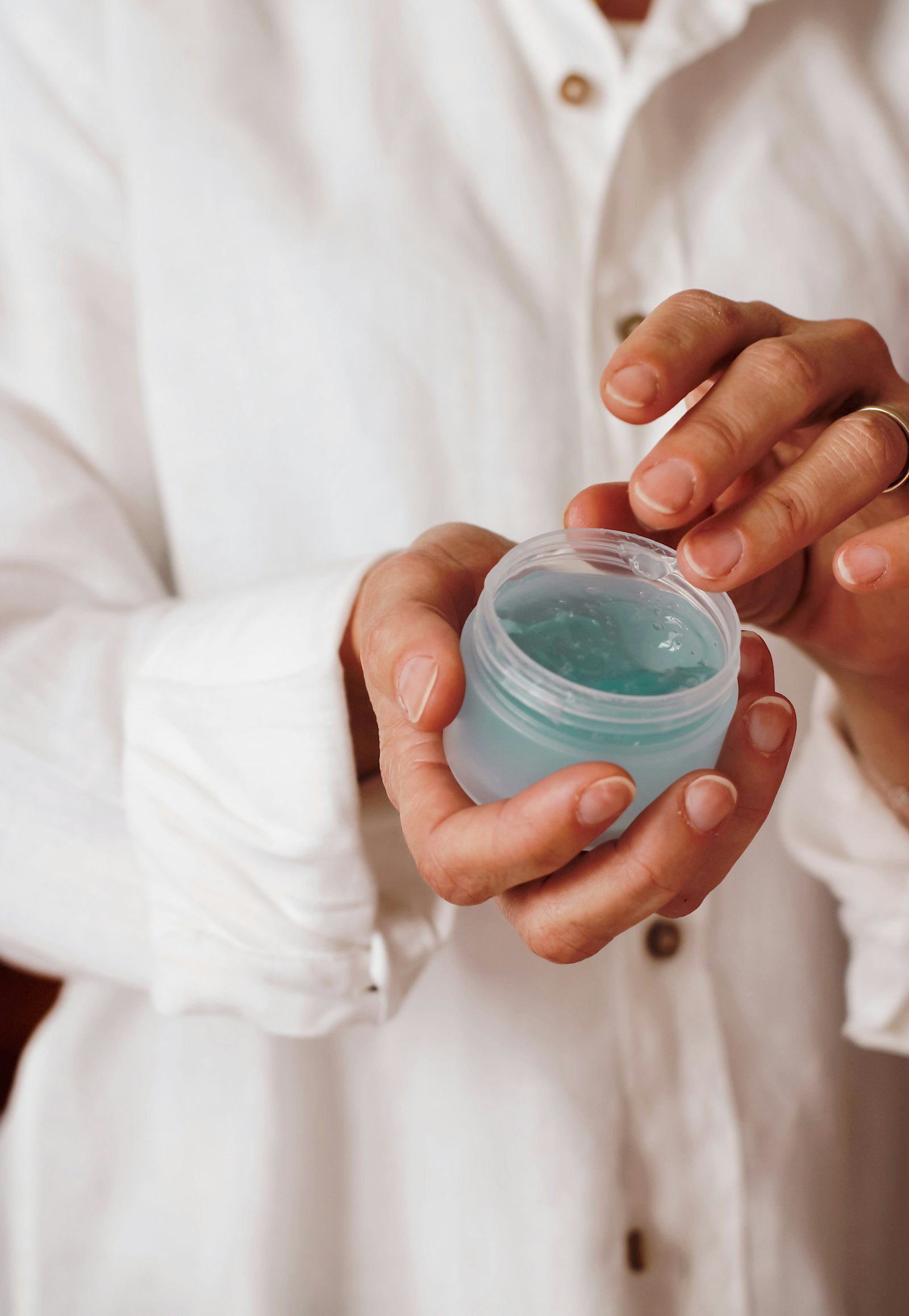
A bold front-label claim is only a starting point; the ingredient list carries more useful evidence.
A jar says FRAGRANCE-FREE, yet the back panel contains unfamiliar plant extracts, preservatives, and chemical names. That mismatch often creates needless suspicion. Some cosmetic ingredients have a natural odor but are included for functions unrelated to scent.
The practical screen is narrower: look for intentionally added fragrance, including fragrance, parfum, essential oils, and strongly aromatic extracts. “Unscented” is not equivalent; masking fragrance may be used to neutralize a formula’s smell. Even a genuinely fragrance-free moisturizer can still irritate sensitive skin, feel unpleasant, or offer poor value. The claim identifies one formulation choice. It does not establish tolerance, ingredient quality, or overall performance.
“Fragrance-free” and “unscented” are not interchangeable
- Fragrance-free
This usually indicates that no perfume was added to create a scent. The front claim still does not establish that the formula lacks aromatic plant extracts or naturally odorous ingredients.
- Unscented
This describes the perceived smell, not necessarily the formula. A masking fragrance may be used to neutralize another odor, which is the central issue in the distinction between fragrance-free and unscented moisturizers.
- Fragrance or parfum
Under US cosmetic-labeling rules, a fragrance mixture may appear under the single term “fragrance” or “parfum.” Its individual components generally do not have to be disclosed.
- Essential oils and aromatic extracts
Lavender oil, citrus peel oils, eucalyptus oil, and similar materials may add scent without appearing as “fragrance.” Their presence does not automatically make a formula unsuitable, but it weakens a strict fragrance-free interpretation.
- Ingredient order
Ingredients above 1% generally appear in descending order of predominance. Ingredients at 1% or less may be listed in any order, so placement provides clues rather than exact concentrations.
Read every moisturizer label in the same order
- Treat the front panel as a screening claim
Use “fragrance-free” to narrow the field, not to finish the assessment. Terms such as “clean,” “gentle,” and “for sensitive skin” do not disclose formulation details.
- Find the current full ingredient list
Check the package first, then the manufacturer’s current listing if needed. Retailer pages can contain outdated formulas or shortened lists.
- Search for direct fragrance declarations
Look for “fragrance,” “parfum,” and any stated masking fragrance. A product labeled unscented but listing one of these contains a scent mixture, regardless of whether the finished cream has a noticeable odor.
- Review aromatic ingredients individually
Scan for essential oils, peel oils, flower oils, and strongly aromatic extracts. Also note compounds such as limonene, linalool, citral, eugenol, and geraniol, which may occur within botanical materials.
- Use position to estimate prominence
An aromatic ingredient near the beginning likely has greater formula prominence than one near the end. Position cannot reveal a percentage, especially below the 1% threshold.
- Judge the whole formula, not one omission
The absence of perfume says nothing about moisturization or value. Humectants, emollients, occlusives, package size, and unnecessary complexity still determine whether the product’s claims support its cost.
Ingredient lists can change. Recheck the package when repurchasing, even if the product name and front label remain unchanged.
Screen the scent, then assess the formula
Start with the ingredient list, not the front label. Fragrance, parfum, perfume, and aroma are direct signals of an added scent mixture. Flavor may also warrant scrutiny in products used near the lips. These umbrella terms do not disclose every component within the mixture.
Next, scan for essential oils and aromatic extracts. Common examples include lavender oil, peppermint oil, citrus peel oils, eucalyptus oil, and rose flower oil. Their plant origin does not make them functionally fragrance-free for a scent-sensitive buyer. The distinction is covered further in how essential oils fit into fragrance-free claims.
Not every noticeable smell indicates added fragrance. Ceramides, shea butter, oat ingredients, fatty acids, and some preservatives can give a formula a waxy, earthy, or chemical odor. If no fragrance mixture, aromatic botanical, or essential oil appears, a mild raw-material smell may simply reflect the base formula.
Look beyond exclusion
Once scent ingredients are screened out, performance depends on three complementary groups:
- Humectants, such as glycerin, hyaluronic acid, and urea, attract water.
- Emollients, including squalane, triglycerides, and fatty alcohols, smooth gaps between surface cells.
- Occlusives, such as petrolatum, dimethicone, and mineral oil, reduce water loss.
A humectant-heavy gel may feel elegant but prove insufficient for very dry skin. A dense occlusive can reduce water loss yet feel excessive on oily skin. Formula balance, texture, climate, and packaging matter more than a long list of fashionable extracts.
Latin plant names can obscure aromatic ingredients. Terms such as Lavandula angustifolia oil and Citrus limon peel oil still identify lavender and lemon oils. A botanical-heavy moisturizer is not worth a premium when those extracts add marketing appeal but little support to the basic moisturizing system.
What a balanced moisturizer should show
- Clear scent disclosure
The ingredient list should support the front-label claim.
Look forNo fragrance, parfum, aroma, essential oils, or aromatic extractsBe cautious ofVague claims contradicted by scented plant oils - Complementary moisturizers
Multiple ingredient roles generally provide broader support than one fashionable active.
Look forHumectants paired with emollients and, when needed, occlusivesBe cautious ofExtract-heavy formulas with a weak moisturizing base
Gel, lotion, or cream?
The terms gel, lotion, and cream are not standardized measures of richness. They describe texture more reliably than performance. Occlusiveness depends on the full formula, particularly oils, waxes, silicones, petrolatum, and other ingredients that reduce water loss.
| Texture | Typical finish | Relative occlusiveness | Climate and layering fit |
|---|---|---|---|
| Gel | Light, often quick-drying | Usually lower | Suits humid weather and layers readily under sunscreen; some formulas can feel sticky or tight |
| Lotion | Fluid, lightly emollient | Usually moderate | Adaptable across seasons; often balances daytime comfort with easier layering |
| Cream | Richer, sometimes glossy | Usually higher | More useful in cold or dry air; heavy applications may pill beneath sunscreen or makeup |
Oil-prone skin may favor a gel or light lotion, but avoiding all emollients is not inherently beneficial. Dry skin often needs a cream with both humectants and occlusive ingredients. Combination skin may respond better to a lotion overall, with cream applied only to drier areas.
Sensitive skin cannot be matched by texture alone. A short fragrance-free formula may still contain a preservative, botanical extract, or active that causes irritation. Anyone managing acne, eczema, or rosacea should seek guidance from a dermatologist, particularly when products repeatedly sting or worsen symptoms.
Apply a thin layer before sunscreen and allow it to settle. Rolling, flaking, or pilling can reflect incompatible film-formers or simply too much product. A lighter application is worth trying before replacing the moisturizer.
A narrower screen produces better comparisons
Assessments rely on current disclosures and attributed evidence, not physical testing. The screen prioritizes relevant scent ingredients, then examines whether the overall formula and package justify the cost.
-
Verify the disclosed formula
Manufacturer ingredient lists and fragrance claims receive more weight than retailer summaries. Formula changes remain possible, so the package list is the final reference.
-
Compare practical specifications
Quantity, pump or jar packaging, texture category, and useful formulation differences shape value. A costly formula is not worth the premium when the extra spend buys only positioning or decorative packaging.
-
Separate patterns from anecdotes
Recurring review themes can flag pilling, tackiness, dispensing problems, or makeup compatibility. Individual reactions are not treated as representative evidence.
Availability, packaging, and formulas can change without broad notice.
Check the package, formula, and skin response
-
Read the label on the product received
Retailer pages can show older formulas. Compare the package ingredient list with the manufacturer’s current disclosure, particularly after a redesign or reformulation.
-
Resolve incomplete or conflicting information
Ask the manufacturer to confirm the current ingredient list when the carton, container, and online listing disagree. A vague answer weakens the case for buying or keeping the product.
-
Inspect tamper protection
Check expected shrink bands, foil seals, pump locks, and carton closures. Do not use a product if protection is missing, broken, or inconsistent with the manufacturer’s packaging description.
-
Record opening and storage dates
Note the period-after-opening symbol and any printed expiration date. The main expiration warning signs include separation, discoloration, texture changes, and altered odor.
-
Patch test before broader application
Apply a small amount to a limited area as the label directs. Extra caution is reasonable with retinoids, AHAs, BHAs, vitamin C, or benzoyl peroxide; stop if persistent irritation develops.
A home patch test can reveal obvious irritation, but it cannot guarantee future tolerance.
A faint waxy, oily, or botanical odor may come from raw materials in an otherwise fragrance-free formula. The difference between normal ingredient odor and spoilage depends partly on whether the smell was present from opening.
A newly rancid, sour, unusually sharp, or substantially changed smell can indicate deterioration. Discarding the product is more prudent than masking the odor or continuing use.
- Verify the claim Read the current ingredient list rather than relying on the product name, retailer copy, or an older formula.
- Assess the base Prioritize humectants, emollients, and occlusives in proportions appropriate for the intended routine.
- Match the texture Match gel, lotion, or cream formats to climate, finish, layering needs, and dryness level.
- Question the extras Pay more only when added ingredients, packaging, or formula design serves a clear purpose.
“Fragrance-free” describes scent formulation. It does not guarantee gentleness, compatibility, or better performance.
A sensible starting point is the simplest suitable formula, not the longest ingredient list. Confirm the fragrance claim against the latest manufacturer disclosure, then judge the moisturizing base and texture on their practical fit.
Introduce one product at a time and monitor comfort, odor, texture, and skin response over several uses. Patch-test formulas containing actives. Stop using a product if irritation develops; persistent concerns warrant guidance from a dermatologist.
