
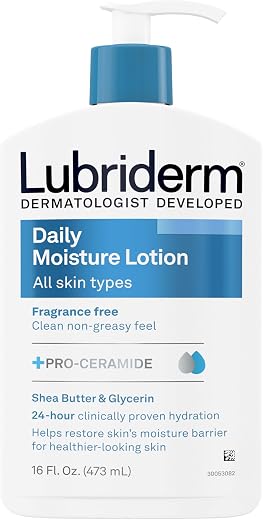
CeraVe adds ceramides for a weak skin barrier. Lubriderm relies on mineral oil and glycerin, and costs less.
Both are fragrance-free daily lotions for face and body, but they’re built differently. CeraVe Daily Moisturizing Lotion is oil-free and contains three ceramides, cholesterol and hyaluronic acid, the lipids and humectants a damaged barrier needs. Lubriderm Daily Moisture is simpler: mineral oil to seal, glycerin to hydrate, plus shea butter and oat kernel oil. Despite the Pro-Ceramide name, it has no ceramides.
If your skin is just dry, Lubriderm does the job for less per ounce. If it’s itchy or eczema-prone, or you want one lotion for your face too, CeraVe is worth the extra.
Which lotion to buy


What actually separates them
- Ceramides
CeraVe has three ceramides plus cholesterol and phytosphingosine. Lubriderm has none. Ceramides matter most for skin with a weakened barrier: eczema-prone, very dry or easily irritated.
Look forCeramides NP, AP or EOP on the list.AvoidAssuming Pro-Ceramide means ceramides. - Oil vs. oil-free
Lubriderm’s second ingredient is mineral oil, a reliable seal for dry body skin. CeraVe is oil-free and leans on glycerin and dimethicone, which feels lighter on your face.
Look forMineral oil for dry legs, oil-free for your face.AvoidA heavier lotion on oily facial skin. - Sensitive skin
Both are fragrance-free. CeraVe adds the National Eczema Association’s Seal of Acceptance, which makes it the safer first try for reactive skin.
Look forFragrance-free with barrier lipids.AvoidScented versions of either lotion. - Cost per ounce
Lubriderm’s 16 fl oz bottle costs less per ounce than either CeraVe size. Between the two CeraVe bottles, the 19 oz is the better value.
Look forCost per ounce, not per bottle.AvoidBuying the 12 oz CeraVe for whole-body use.
CeraVe gives you ceramides and cholesterol for a weak or irritated barrier. Lubriderm gives you mineral oil and glycerin for plain dryness, for less money. If your skin is only dry, Lubriderm is enough. If it itches, flakes or reacts, buy CeraVe.
CeraVe Daily Moisturizing Lotion: ceramides for face and body
Ceramide lotion for face and body, 19 oz.
CeraVe’s lotion puts glycerin, light emollients and dimethicone up top, with the part that matters further down: ceramides NP, AP and EOP, cholesterol and phytosphingosine. Those are the lipids your skin barrier is made of, which is why this lotion suits skin that feels tight, itchy or rough. Sodium hyaluronate (hyaluronic acid) adds a second humectant alongside glycerin.
It’s oil-free, fragrance-free and non-comedogenic, so it works on your face as well as your body, and it carries the National Eczema Association’s Seal of Acceptance.
The 19 oz bottle costs less per ounce than the 12 oz, but more per ounce than Lubriderm.
- Ceramides NP, AP and EOP plus cholesterol and phytosphingosine
- Hyaluronic acid and glycerin for hydration
- Oil-free, fragrance-free and non-comedogenic
- National Eczema Association Seal of Acceptance
- Costs more per ounce than Lubriderm
- A 19 oz bottle is a big commitment if you haven’t tried it
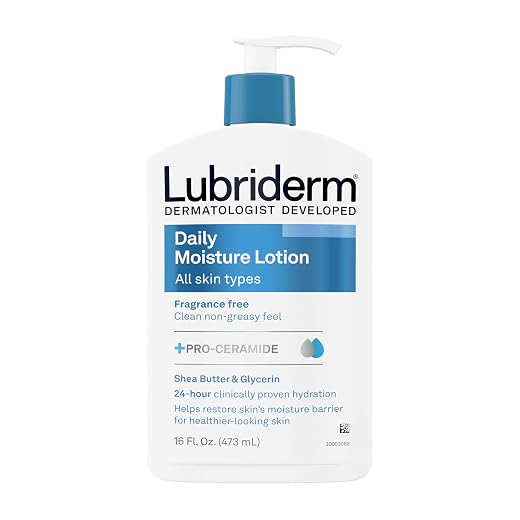
Lubriderm Daily Moisture: a simple mineral-oil body lotion
Simple mineral-oil body lotion, 16 fl oz.
Lubriderm is built on two of the most dependable moisturizing ingredients there are. Mineral oil, second on the list, forms a light seal that slows water loss. Glycerin, third, pulls water into the top layer of skin. Shea butter and oat kernel oil add softness, and magnesium, zinc and copper salts round out the list.
Despite the Pro-Ceramide name, the list contains no ceramides. That’s the real gap against CeraVe. For skin that’s simply dry, it doesn’t matter much. For eczema-prone or easily irritated skin, it does.
It’s fragrance-free, labeled for face and body, and the 16 fl oz bottle costs less per ounce than either CeraVe size.
- Mineral oil and glycerin: a simple, effective pair for dry body skin
- Shea butter and oat kernel oil add softness
- Fragrance-free and costs less per ounce than CeraVe
- No ceramides, despite the Pro-Ceramide name
- Mineral oil leaves more slip than CeraVe on your face
CeraVe Daily Moisturizing Lotion, 12 oz: the same formula in a starter size
- Same ceramide and hyaluronic acid formula as the 19 oz
- Smaller first purchase if you haven’t tried CeraVe
- Costs more per ounce than the 19 oz bottle
- Costs more per ounce than Lubriderm
| Barrier support, face and body CeraVe Daily Moisturizing Lotion for Face and Body | VS | Budget body moisture Lubriderm Fragrance-Free Daily Moisture Face and Body Lotion |
|---|---|---|
Ceramides NP, AP, EOP, cholesterol, hyaluronic acid | Key ingredients |
Mineral oil, glycerin, shea butter, oat kernel oil |
Three, plus cholesterol | Ceramides |
None |
Oil-free | Oils |
Mineral oil (second ingredient) |
Non-comedogenic, NEA Seal of Acceptance | On the label |
Won't clog pores |
19 oz (also 12 oz) | Bottle size |
16 fl oz |
| View | View |
Which is better for everyday body moisturizing?
For ordinary dry skin on your arms and legs, Lubriderm is enough. Mineral oil seals moisture in, glycerin draws water to the skin, and it costs less per ounce. CeraVe is the better pick if your skin is itchy, flaky or eczema-prone.
Can I use Lubriderm on my face?
Yes. Lubriderm is labeled for face and body and says it won’t clog pores. CeraVe is still the better face lotion: it’s oil-free, non-comedogenic and adds ceramides and hyaluronic acid.
Which one feels lighter?
CeraVe. It’s oil-free, built on glycerin, light emollients and dimethicone, so it sinks in without an oily film. Lubriderm’s mineral oil leaves a little more slip, which helps very dry legs but can feel heavier on your face.
Does Lubriderm's Pro-Ceramide mean it has ceramides?
No. Lubriderm’s ingredient list has no ceramides. It pairs mineral oil, glycerin and shea butter with oat kernel oil and magnesium, zinc and copper salts. If ceramides are why you’re shopping, buy CeraVe.
What if my dry skin comes from eczema or another condition?
CeraVe is the better daily moisturizer here, and it carries the National Eczema Association’s Seal of Acceptance. If a rash, cracking or itch doesn’t improve with regular moisturizing, see a dermatologist.
-
Decide where it's going
Body only, and your skin is just dry? Lubriderm does the job for less. Face too, or skin that reacts easily? Go with CeraVe.
-
Check for eczema or a damaged barrier
If your skin is itchy, rough or prone to eczema patches, CeraVe’s ceramide-cholesterol mix and NEA Seal make it the better fit.
-
Pick the bottle size
CeraVe comes in 12 oz and 19 oz. The bigger bottle costs less per ounce, but the smaller one is the safer first buy.
-
Apply to damp skin
Either lotion works best within a few minutes of a shower, while your skin is still slightly damp.
Which lotion should you buy?
Choose CeraVe Daily Moisturizing Lotion if your skin is sensitive or eczema-prone, or you want one lotion for your face too. Three ceramides, cholesterol and phytosphingosine replenish the lipids that keep moisture in, hyaluronic acid adds water, and the formula is oil-free, fragrance-free and non-comedogenic. It carries the National Eczema Association’s Seal of Acceptance.
Choose Lubriderm Daily Moisture if you want a simple, low-cost body lotion for ordinary dry skin. Mineral oil and glycerin are a classic, effective pair for dry arms and legs, and it costs less per ounce than either CeraVe size.
New to CeraVe? Start with the 12 oz bottle, then move to the 19 oz once you know you like it.
