

Start with retinol. Retinal is stronger and faster, which makes it a better second step than a first one.
Retinol and retinal are both forms of vitamin A that your skin turns into retinoic acid, the form that actually smooths fine lines and unclogs pores. Retinal is one step closer, so it works faster and harder. That also means more dryness and peeling while your skin gets used to it.
For a first retinoid, The Ordinary Retinol 0.2% in Squalane is our pick: a modest dose, a short fragrance-free formula and the lowest cost. If your skin is dry or easily irritated, Good Molecules Gentle Retinol Cream is gentler still at 0.1% and moisturizes too. Save Medik8 Crystal Retinal 3 for when retinol feels easy and you want more.
- Best first retinoid The Ordinary Retinol 0.2% in Squalane: a modest retinol dose in a short, fragrance-free oil base, and the lowest cost. The best first retinoid for most people.
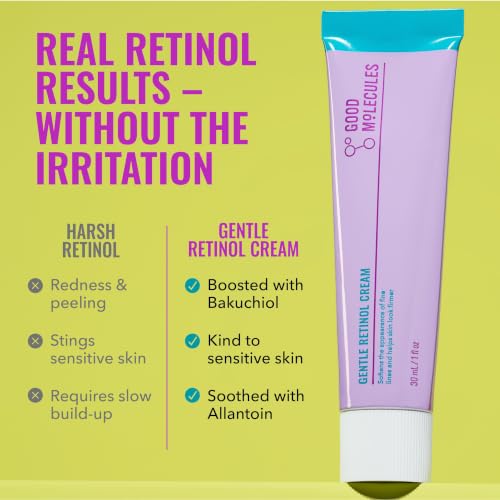
- Best for dry or sensitive skin Good Molecules Gentle Retinol Cream: 0.1% retinol plus bakuchiol in a fragrance-free night cream. The gentlest start, and it moisturizes too.
- Best step-up Medik8 Crystal Retinal 3: 0.03% slow-release retinal in a hydrating serum. Stronger and faster, and best once retinol feels easy.
Whichever you pick, start two nights a week, use a pea-sized amount, and wear sunscreen every morning.
Retinol vs. retinal: the one-step difference
Your skin can only use vitamin A in one form: retinoic acid. Everything else has to be converted. Retinol takes two steps: first to retinal (retinaldehyde), then to retinoic acid. Retinal takes just the one.
Because retinal skips a step, it works faster and more strongly than the same amount of retinol. That's the real difference between the two: retinal is the stronger, quicker option, and retinol is the gentler one.
The flip side is irritation. A stronger retinoid also tends to cause more dryness, flaking and redness while your skin adjusts, and a product you keep pausing does less than a milder one you use every night.
Our advice: start with retinol. It lets your skin adjust slowly, it costs less, and it tells you whether your skin gets along with retinoids before you spend more. Once retinol feels easy, retinal is the natural next step.
What the percentages mean
Retinoids are among the best-proven ingredients for fine lines, uneven texture and clogged pores. Prescription tretinoin is retinoic acid itself and is the strongest; over-the-counter retinol and retinal are gentler because your skin has to convert them first. For a first retinoid, that gentleness is a feature.
You can't compare a retinol percentage with a retinal percentage directly. Retinal is much more potent per percent, which is why retinal products come in much smaller numbers. A 0.03% retinal is not weaker than a 0.2% retinol just because the number is lower.
Here's how the three compare:
- Retinol 0.2% (The Ordinary): a low-to-moderate retinol dose and a sensible first step.
- Retinol 0.1% (Good Molecules): half that dose, in a cream, with bakuchiol added. The gentlest start of the three.
- Retinal 0.03% (Medik8): a small number, but retinal is one step closer to retinoic acid, so it acts more strongly per percent than retinol does.
- The base matters too: an oil serum, a cream and a water-based serum feel different on your skin and fit different routines.
So don't pick on the biggest number. Pick on your skin and your experience: retinol if you're new, retinal once retinol feels easy.
The Ordinary Retinol 0.2% in Squalane: the best first retinoid
The Ordinary Retinol 0.2% in Squalane is a plain, honest first retinoid: 0.2% pure retinol in a short, fragrance-free list. That's enough retinol to do something, low enough that most skin adjusts with a slow start, and it costs the least of the three.
The base is squalane, caprylic/capric triglyceride and jojoba oil, with no water. That keeps the retinol stable and gives the serum a slippery, oil-like feel that sinks in over a few minutes. A few drops cover your face. Dry skin tends to like it; oily skin may find it a bit slick.
Who should buy it: almost any first-timer, especially with normal or dry skin. Who should skip it: very oily skin that hates any slip, and anyone who wants a single step that also moisturizes (go with Good Molecules). Use it at night only, after any water-based serums and before moisturizer. Some acne-prone skin breaks out a little in the first few weeks; that usually settles.

0.2% retinol in a water-free blend of squalane, caprylic/capric triglyceride and jojoba oil, with tomato extract and BHT to help keep the retinol stable. Fragrance-free, short ingredient list, lowest cost of the three.
Our pick for a first retinoid. The oily finish suits normal to dry skin best; oily skin needs only a few drops.
Good Molecules Gentle Retinol Cream: the gentlest start
Good Molecules Gentle Retinol Cream has 0.1% retinol, half The Ordinary's dose, built into a night cream. It also contains bakuchiol, a plant extract often used as a gentle retinol alternative. Bakuchiol isn't a retinoid and doesn't convert to retinoic acid, but it adds to the cream's smoothing effect without adding much irritation.
The base is a light cream with glycerin, grape seed oil, sunflower seed oil and a lightweight emollient (C13-16 isoparaffin), so on most nights you won't need a separate moisturizer. Allantoin adds a soothing touch, and green tea and white willow bark extracts round it out. It's fragrance-free.
Who should buy it: dry or easily irritated skin, and anyone who wants a single step at night. Who should skip it: oily skin that already feels coated by creams, or anyone ready for a stronger dose. Start with two or three nights a week and build up as your skin adjusts.
The gentlest start here: half The Ordinary’s retinol dose in a fragrance-free night cream that also moisturizes.
Medik8 Crystal Retinal 3: the step-up option
Crystal Retinal 3 contains 0.03% retinal (retinaldehyde), held in an encapsulated form that releases slowly overnight. The "3" is the strength step in Medik8's range, not 3%. The low number is deceptive: because retinal skips the first conversion step, 0.03% retinal acts more strongly than you'd guess from comparing it with 0.2% retinol.
The base is a light, water-based serum. Glycerin, squalane and hyaluronic acid hydrate, and vitamin E plus two vitamin C derivatives (3-O-ethyl ascorbic acid and tetrahexyldecyl ascorbate) add antioxidant support. It sinks in fast and layers easily under moisturizer, which makes it the best fit of the three for oily and combination skin.
Who should buy it: you've used a retinol for a few months without trouble and want something stronger, or you want a retinoid that also hydrates. Who should skip it: first-timers on a budget. The Ordinary or Good Molecules will tell you whether your skin likes retinoids for a fraction of the cost. If you do start here, use it two nights a week for two weeks, every other night for two weeks, then nightly.

0.03% encapsulated retinal in a water-based serum with glycerin, squalane, hyaluronic acid, vitamin E and two vitamin C derivatives. It’s lighter than The Ordinary and more hydrating.
Best as your second retinoid, or your first if your skin already tolerates actives well. It costs several times more than either retinol here.
Pick your first retinoid
- You've never used a retinoid
Start with The Ordinary Retinol 0.2% in Squalane. It’s a modest retinol dose in a short, fragrance-free list, and it costs the least. If your skin handles it well after a couple of months, you can move up.
Your pickThe Ordinary Retinol 0.2%SkipStarting with retinal or a high-strength retinol - Your skin is dry or easily irritated
Start with Good Molecules Gentle Retinol Cream. At 0.1% it’s half The Ordinary’s dose, and the cream base adds glycerin and plant oils, so it does double duty as a night moisturizer.
Your pickGood Molecules Gentle Retinol CreamSkipOil serums that leave dry skin wanting more - You've already used retinol comfortably
Move to Medik8 Crystal Retinal 3. Retinal is a step closer to the active form, so it works more strongly than the retinol you’re used to, and the Crystal Retinal range lets you step up again later.
Your pickMedik8 Crystal Retinal 3SkipJumping straight to a higher retinal strength - You have oily or acne-prone skin
Medik8’s water-based serum or Good Molecules’ cream will feel lighter than The Ordinary’s squalane base. If you go with The Ordinary, use only a few drops. Any retinoid can bring a short-term breakout in the first weeks.
Your pickA water-based serum or light creamSkipLayering an oil serum under a heavy moisturizer
How to start your first retinoid
- Patch-test first
Apply a little to one spot along your jawline for a few evenings. Retinoid irritation can take a day or two to show up.
- Start two nights a week
Use it on two non-consecutive nights for the first two weeks, then every other night for two weeks, then nightly if your skin stays comfortable. This ramp works for all three products here.
- Apply to dry skin, pea-sized
Cleanse, let your face dry fully, then use a pea-sized amount for your whole face. Keep it away from the corners of your nose, eyes and mouth, where skin is thinnest.
- Follow with moisturizer
A plain moisturizer on top cuts dryness. If your skin is sensitive, you can put moisturizer on first and the retinoid over it to soften the dose.
- Pause other actives
Don’t start a retinoid in the same weeks as a new acid or exfoliant, and never use two retinoids at once. Bring other actives back on nights you skip the retinoid.
- Wear sunscreen every morning
Use a broad-spectrum SPF 30 or higher daily. Retinoids make your skin more sensitive to the sun, and sun damage undoes the work.
Give any retinoid about three months of regular use before deciding whether it’s working.
Some dryness and light flaking in the first few weeks is common. Burning, stinging or redness that lasts is not a sign of progress. Drop back to fewer nights a week, and if it still doesn’t settle, stop and see a dermatologist. Skip retinoids entirely if you’re pregnant or breastfeeding.
Start with retinol, not retinal. For most first-timers, The Ordinary Retinol 0.2% in Squalane is the pick: a real but modest dose, a short fragrance-free ingredient list and the lowest cost of the three. Use it two nights a week and build up.
Choose Good Molecules Gentle Retinol Cream if your skin is dry or easily irritated, or if you’d rather use one cream than a serum plus moisturizer. At 0.1% it’s the gentlest way in.
Choose Medik8 Crystal Retinal 3 once retinol feels easy, or if you already know your skin handles retinoids. It’s the stronger, faster option and costs several times more, so it makes more sense as your second retinoid than your first.
