
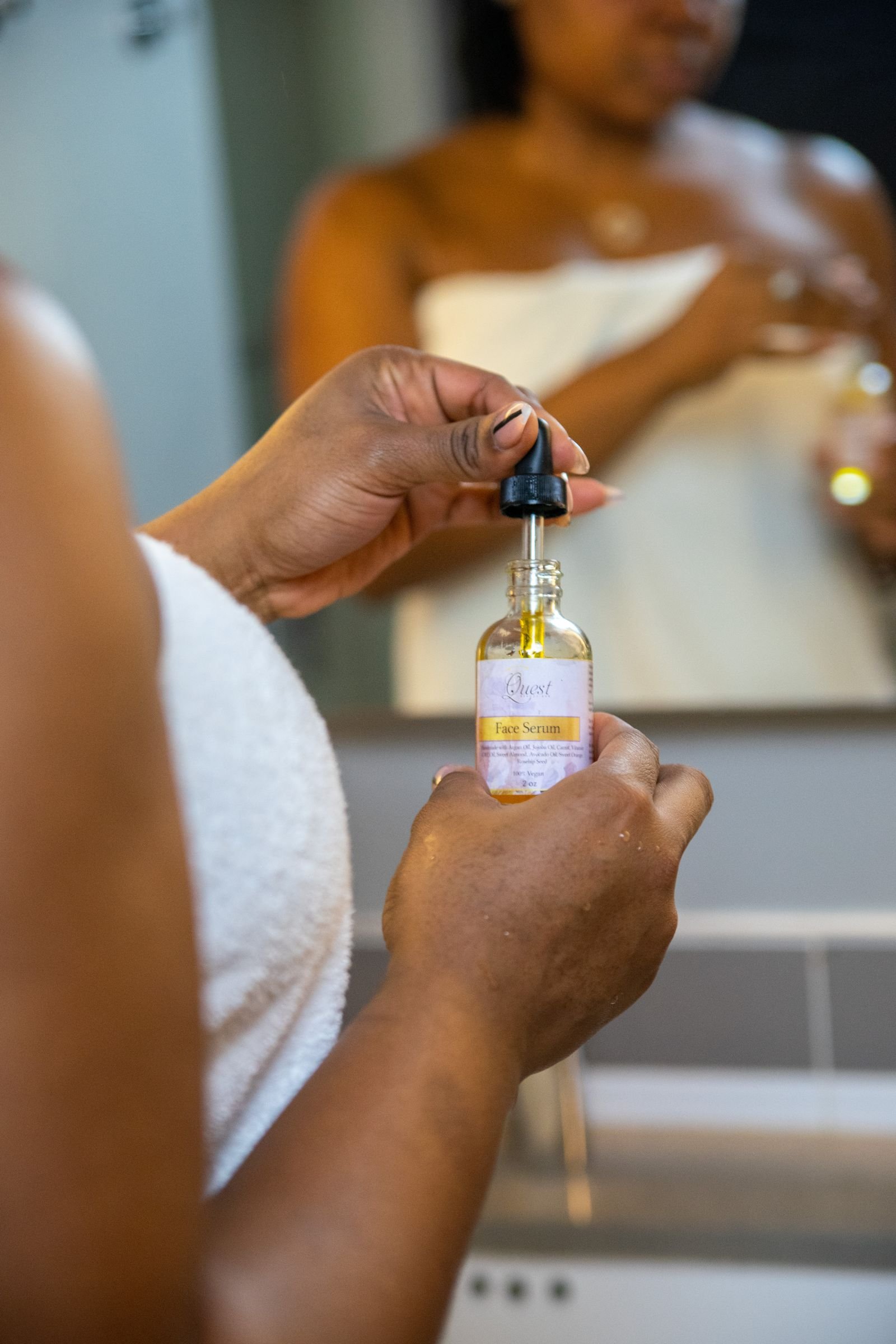
A prestige humectant name does not guarantee a better hydration formula.
Two clear serums sit side by side: one uses inexpensive glycerin, while the other promotes multiple forms of hyaluronic acid at a premium. The higher price may buy a lighter texture or a more refined formula. It does not, by itself, establish stronger hydration.
Both ingredients attract water, but performance depends on concentration, supporting emollients, climate, and the moisturizer layered over the serum. Glycerin has extensive use in barrier-supporting formulas and may offer better value in a well-balanced base. Hyaluronic acid can provide an elegant feel, though “multi-weight” claims reveal little without meaningful amounts and sound formulation. In dry air, either serum may feel insufficient without a moisturizer that helps limit water loss.
What this comparison can establish
The analysis combines published research on humectants with disclosed ingredient lists, manufacturer specifications, and recurring themes in attributed user reviews. It assesses formulation logic and how hydrating face serums work, not results from physical product testing.
-
Ingredient lists show structure, not dose
Label order can indicate which ingredients are relatively prominent, but brands rarely disclose percentages. A glycerin or hyaluronic acid claim therefore carries limited weight when the full formula does not support it.
-
Research informs ingredients, not every finished serum
Evidence that a humectant binds water does not verify a particular product’s performance. Vehicle, concentration, molecular size, supporting lipids, and application conditions can change the result.
-
Reviews identify patterns, not proof
Repeated reports of pilling, tackiness, irritation, or packaging faults can flag practical concerns. Reviews cannot isolate one ingredient or establish efficacy.
Marketing claims receive less weight than the disclosed formula. Unsupported premium positioning is not worth paying more for.
Hydration is only one part of a dry-skin routine
- Humectant
A water-binding ingredient that can increase moisture in the outer skin layer. Its effect may be temporary without a formula that limits water loss.
- Glycerin
A small, established humectant commonly used at meaningful levels across serums and moisturizers. Performance depends on concentration and the surrounding base.
- Hyaluronic acid
A family of water-binding molecules available in different molecular weights and salt forms. Multiple forms on a label do not automatically indicate a more effective serum.
- Emollient
An ingredient, often a lipid or oil, that softens rough texture and fills spaces between surface skin cells.
- Occlusive
An ingredient that forms a water-loss-reducing film. For dry skin, a serum containing humectants may still need an emollient or occlusive moisturizer on top.
Where glycerin earns its place
Glycerin is inexpensive, well studied, and compatible with cleansers, toners, serums, and moisturizers. Published dermatology literature supports its role in increasing water content within the stratum corneum. Unlike some trend-driven ingredients, it does not require a specialized delivery system to be useful.
Its performance still depends on the surrounding formula. In humid air, glycerin can bind environmental moisture. In drier conditions, a formula containing water plus emollients and occlusives is more dependable because those ingredients help reduce moisture loss after application. A glycerin serum followed by a moisturizer can serve the same purpose, but a single balanced moisturizer may be simpler.
Concentration also affects texture. Higher glycerin levels can feel sticky or leave a persistent film, particularly when several humectant-heavy layers are combined. Ingredient lists rarely disclose percentages, so a prominent position on the list signals presence rather than a guaranteed performance advantage.
Before adding a dedicated serum, check products already in the routine:
- Moisturizer: Glycerin near the top of the list may make another glycerin step redundant.
- Toner or essence: A leave-on formula may already provide a substantial humectant layer.
- Cleanser: Glycerin can reduce a stripped feel, but rinse-off contact limits its contribution to lasting hydration.
A separate glycerin serum is often not worth the money when existing leave-on products already pair glycerin with barrier-supporting lipids or occlusives.
What hyaluronic acid actually adds
Hyaluronic acid and sodium hyaluronate, its sodium salt, are water-binding polymers. In a well-balanced serum, they help form a hydrated surface film. That film can reduce the appearance of roughness and make fine dehydration lines look temporarily softer.
This visible “plumping” should not be confused with structural change. A smoother surface does not establish increased collagen, lasting volume, or remodeling below the epidermis. Those stronger interpretations require evidence that most cosmetic serums do not provide.
Why molecular weight matters
Larger hyaluronic acid molecules tend to remain closer to the surface, where they support film formation but may feel tacky. Smaller fractions may move farther into the upper layers of the stratum corneum. Actual behavior still depends on concentration, delivery system, surrounding ingredients, and the condition of the skin barrier.
The INCI name alone does not disclose molecular weight. Sodium hyaluronate is not automatically “deeper penetrating” simply because it is presented as smaller or more refined.
Claims such as “triple-weight,” “multi-molecular,” or “deep hydration” deserve scrutiny. Credible support would specify molecular-weight ranges, concentrations, testing methods, and measured endpoints. Without those details, the language mainly describes a formulation concept.
A price premium is difficult to justify when several hyaluronate forms appear near the end of an ingredient list and no technical data are supplied. Formula balance remains more informative than the number of hyaluronic acid variants named.
The practical trade-offs
Ingredient names describe only one variable. Concentration, molecular weight, vehicle, and the emollient-occlusive system shape both hydration and skin feel.
| Criterion | Glycerin | Hyaluronic acid |
|---|---|---|
| Water-binding role | Small humectant that attracts and retains water | Water-binding polymer that also forms a surface film |
| Molecular characteristics | Single, low-molecular-weight compound | Available in multiple molecular weights and salt forms |
| Texture risk | Can become sticky at higher concentrations | Can pill, tighten, or feel tacky in film-heavy gels |
| Formulation position | Common supporting ingredient in cleansers, serums, and moisturizers | Often positioned as the featured ingredient in lightweight serums |
| Climate considerations | Generally versatile when paired with emollients and occlusives | Light gels may need a moisturizer over them in dry conditions |
| Evidence | Long history and broad support in moisturizer research | Evidence supports temporary hydration and smoothing; molecular-size claims are less consistent |
| Marketing burden | Rarely carries a substantial branding premium | Frequently supports premium claims that the full formula may not justify |
| Likely value | Strong utility inside an existing moisturizer; a separate serum may be redundant | Reasonable when a light, film-forming layer is specifically preferred |
Neither ingredient wins on the label alone. Paying more for hyaluronic acid is difficult to justify when the formula lacks useful supporting humectants, emollients, or occlusives. Conversely, glycerin’s lower profile does not guarantee an elegant texture.
Read the formula, not the front label
Start with the first five or six ingredients. Water followed by glycerin, propanediol, butylene glycol, sodium hyaluronate, sodium PCA, or urea indicates a humectant-led base. Several may appear together; a “multi-hydration” claim can simply describe this familiar combination.
Ingredient order provides relative position, not percentages. Under US labeling rules, ingredients present above 1% generally appear in descending order. Ingredients at 1% or less may be listed in any order afterward. That makes close rankings near the end poor evidence that one formula contains meaningfully more hyaluronic acid than another. A broader guide to comparing skincare ingredient lists can help distinguish prominent ingredients from label decoration.
Next, look for ingredients that make water binding more comfortable or persistent:
- Panthenol, beta-glucan, and amino acids add other water-binding or conditioning components.
- Ceramides are more useful when supported by complementary lipids rather than scattered into a basic serum.
- Silicones and lightweight emollients can reduce drag and soften the finish without the weight of a rich cream.
A long list is not automatically a better formula. Compatibility, concentration, and the final vehicle remain unknown from the label alone.
Terms such as hydration complex, delivery system, or enhanced penetration have little value without named components, concentrations, or supporting formulation data. If the list shows water, common glycols, glycerin, and a small amount of hyaluronate, the product may be a basic blend with expensive positioning.
Match the serum to the gap in the routine
A glycerin-led formula is often the more rational choice when the routine needs basic water-binding support without a marketing premium. Texture and the rest of the base still determine performance.
A hyaluronic acid serum can suit routines that favor a light, water-based layer. Its main visible contribution is usually temporary surface plumping rather than uniquely durable hydration.
Combined formulas may be more useful than choosing between two headline ingredients. Glycerin, hyaluronates, panthenol, beta-glucan, or urea can broaden the formula, although a longer list does not guarantee better results.
An additional hydration step may add little when the cleanser, moisturizer, or sunscreen already contains glycerin or hyaluronates and the routine feels adequate. In that case, the serum is probably not worth the money.
Use either humectant as part of a complete routine
-
Start with a small amount
Apply two or three drops, or enough to form a thin layer. Excess product raises the chance of pilling and tackiness without reliably improving hydration.
-
Apply to slightly damp skin
After cleansing, leave the skin lightly damp rather than dripping wet. Dampness can aid spreadability, but the serum also needs water in its formula to function as intended.
-
Add moisturizer
Follow with a moisturizer containing emollient or occlusive ingredients. This step reduces evaporation and matters more than whether the serum highlights glycerin or hyaluronic acid.
-
Check layer compatibility
Allow the serum to settle before applying thicker products. If it pills, use less, shorten the routine, or avoid combining multiple gel-like formulas.
-
Finish the morning routine with sunscreen
Apply a broad-spectrum sunscreen rated SPF 30 or higher after moisturizer. Neither humectant replaces sun protection.
Apply a small amount to a limited area once daily for several days before broader use. Stop if persistent burning, swelling, marked redness, or itching develops. This check cannot guarantee tolerance, but it can reveal a reaction to the product’s preservatives, fragrance, botanicals, or added actives.
- Use less product before replacing a serum that pills or feels tacky.
- A separate humectant serum may not be worth the money when cleanser, moisturizer, or sunscreen already supplies similar ingredients.
Choose according to the routine gap. Favor the complete formula that remains comfortable, layers cleanly, fits the budget, and is easy to use consistently. The glycerin or hyaluronic acid label is secondary to those practical results.
