
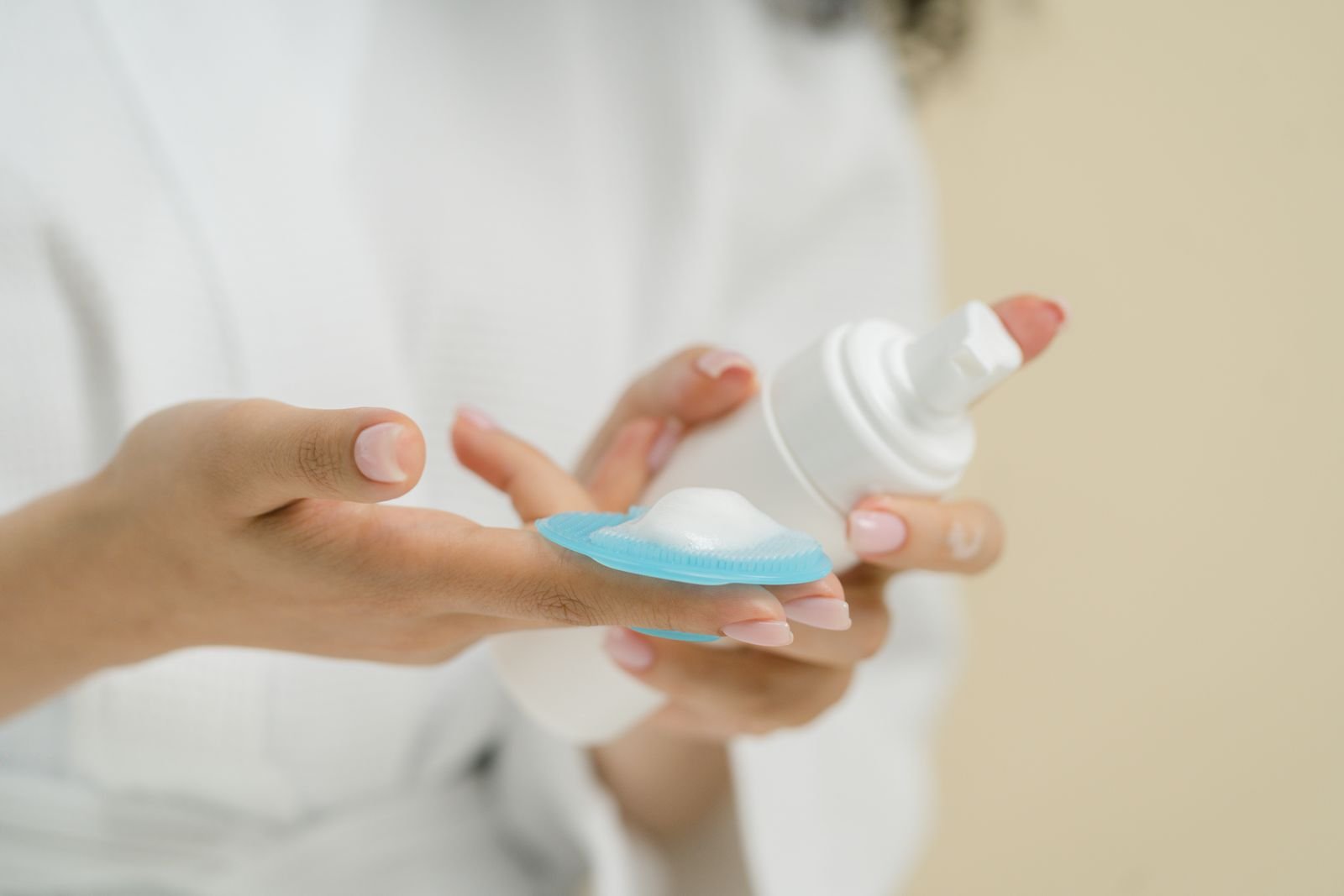
A non-greasy finish can feel clean while a sunscreen film still remains.
At the sink, the usual signals are unreliable. Slip may disappear after rinsing, yet film-forming polymers, pigments, or product around the hairline can remain. Cleansing until skin feels tight is no better: tightness often reflects oil removal and water loss, not proof that sunscreen is gone.
Many non-water-resistant daily sunscreens can be removed with one thorough wash using an effective gentle cleanser. The cleanser must be massaged across dry-prone and easily missed areas, then rinsed completely. More persistent formulas—especially water-resistant, heavily tinted, or layered products—may justify an oil cleanser, balm, or second gentle cleanse rather than a harsher face wash.
Escalate based on the film, not skin tightness
- Read the label FDA-regulated water-resistance claims indicate that a sunscreen is designed to remain effective during water exposure for 40 or 80 minutes. That persistence can also make removal less predictable.
- Check residue Visible tint on a white washcloth can reveal remaining pigment, although rubbing should stay light to avoid unnecessary friction.
- Change the method If one careful cleanse leaves obvious product behind, add a cleansing oil or balm first. Repeated washes with a stripping cleanser are more likely to increase dryness.
Predict how firmly sunscreen adheres
A “water resistant (40 minutes)” or “water resistant (80 minutes)” label means the SPF was retained through standardized water exposure for the stated period under FDA testing rules. It does not mean waterproof, and it does not measure cleanser removal. Still, it is a useful proxy: these formulas often use polymers, waxes, silicones, or oil phases to maintain an even film.
Read the formula as a system
No single ingredient determines persistence. Concentration, ingredient combinations, and the finished film matter more than spotting one silicone or oil on the list.
- Pigments and mineral particles: Iron oxides, zinc oxide, and titanium dioxide can remain around the hairline or in skin texture. When choosing a mineral face sunscreen, the tint and vehicle may predict removal better than the UV filters alone.
- Waxes and oils: Beeswax, synthetic waxes, and richer emollients can increase adhesion and resist a brief water-based cleanse.
- Silicones and polymers: Volatile silicones may evaporate, while silicone resins and film-forming polymers remain. Marketing terms such as “weightless” do not indicate easy removal.
- Makeup and repeated applications: Foundation, concealer, and several sunscreen layers create a thicker composite film. Powder can also bind to oily or polymer-rich layers.
A non-water-resistant lotion applied once is generally a more plausible single-cleanse candidate than a tinted, 80-minute water-resistant formula reapplied several times.
Judge the formula, not the foam
- Effective surfactant system
Surfactants emulsify sunscreen oils and film-forming materials so water can carry them away. Amphoteric and nonionic systems can offer meaningful cleansing without relying on aggressive detergency.
Look forMultiple mild surfactants positioned reasonably high on the ingredient list.AvoidAssuming “mild” or “hydrating” describes sunscreen-removal performance. - Adequate spread and contact
A cleanser needs enough slip to cover the face evenly before rinsing. Formulas that disappear into the skin or drag across it may produce uneven removal.
Look forA fluid cream, gel, or lotion that remains workable during cleansing.AvoidUsing extra pressure to compensate for poor spreadability. - Clean rinsing
The loosened sunscreen should disperse readily with water. A persistent oily or waxy film suggests incomplete removal, while a squeaky finish may simply indicate excessive degreasing.
Look forEasy rinsing with no obvious coated patches around the hairline or nose.AvoidTreating tightness as proof that cleansing succeeded. - Foam in context
Foam reflects air trapped by surfactants, not the amount of sunscreen removed. Low-foaming creams and gels may cleanse effectively when their surfactant blend and rinse behavior are well designed.
Look forPerformance judged by film removal and rinse quality.AvoidEquating abundant lather with stronger cleansing.
Gentleness concerns irritation potential, including surfactant harshness, fragrance, pH, and cleansing time. It is separate from the ability to emulsify sunscreen.
Choosing a gentle facial cleanser therefore requires both questions: does the formula minimize unnecessary irritation, and does it rinse away the specific film being worn? Front-label language answers neither reliably.
Run a controlled single cleanse
-
Follow the cleanser’s use directions
Apply to dry or damp skin as specified. Water added too early can dilute some formulas before they contact the sunscreen film.
-
Use enough cleanser to maintain slip
The cleanser should spread across the face and sunscreen-covered neck without skipping or dragging. An undersized dose reduces contact with the film.
-
Massage gently for 30–60 seconds
Use fingertips and light, circular motions. Time improves coverage; pressure is not a substitute for suitable surfactants.
-
Trace the edges deliberately
Cover the hairline, eyebrows, sides of the nose, jaw, ears, and under the chin. These areas are commonly missed during a quick wash.
-
Rinse thoroughly before applying anything else
Use lukewarm water and repeated splashes until cleanser residue is gone. Pat dry, then check for visible pigment or a persistent coated feel before moisturizer or treatment products.
If the same sunscreen repeatedly leaves residue after this method, a first-step remover is more rational than longer scrubbing.
Hot water, cleansing brushes, washcloth scrubbing, and aggressive rubbing can increase irritation without reliably removing a tenacious film. Persistent residue usually indicates a mismatch between the cleanser and sunscreen, not insufficient pressure.
Inspect the skin after rinsing
After rinsing, inspect the face in neutral light before applying other products. Check the hairline, eyebrows, nostril creases, and jaw, where sunscreen often collects. A tinted formula should not leave obvious color on skin or a towel.
Lightly glide clean fingertips over damp skin. Persistent, localized slipperiness may indicate uneven removal; uniform softness alone is not evidence of residue. If cleansing leaves tightness or stinging, consider what to change when cleansing feels too harsh rather than pursuing a squeaky finish.
Briefly wet the face again and observe the water. Patchy beading over areas that also look or feel coated is more informative than even beading, which may reflect normal skin oils. This remains a rough check, not proof.
Finally, press—not scrub—a clean white cotton pad dampened with water along the hairline and jaw. Visible tint or waxy transfer supports another cleanse. No transfer, comfortable skin, and no patchy film are reasonable stopping points.
One observation can mislead. Another cleanse is more defensible when several findings agree: visible tint, localized slickness, patchy beading, or pad transfer. The practical goal is visibly clean, comfortable skin, not molecular proof of removal.
Escalate only when residue persists
When inspection shows limited residue, an occasional second wash with the same gentle cleanser is the smallest reasonable adjustment. Use another short, complete pass rather than extending one massage or scrubbing isolated areas. If this becomes necessary every day, the cleanser may be poorly matched to the sunscreen film.
For water-resistant, tinted, or heavily layered formulas, a first-step remover can reduce repeated surfactant exposure:
- Micellar water suits light pigment or residue around the hairline. Saturate the pad, wipe with low pressure, then rinse and cleanse.
- Cleansing oil spreads quickly across larger areas and can loosen waxes, oils, and film-forming polymers. Add water to emulsify before rinsing.
- Cleansing balm offers similar oil-based removal in a solid format. Texture and packaging are the main distinctions, not necessarily greater cleaning power.
Balm pricing is difficult to justify when the existing cleanser already removes sunscreen consistently. For readers comparing formats, the differences between Clinique and e.l.f. cleansing balms show why ingredient lists, fragrance, emulsifiers, and container size matter more than prestige positioning.
After any first step, one measured wash with the regular cleanser should complete the process. Persistent transfer after that suggests a product mismatch, not a need for unlimited cleansing.
Limit the routine to two deliberate cleansing passes. More washing and friction can leave skin feeling tight without providing reliable evidence that additional sunscreen was removed.
Troubleshoot the result
If sunscreen remains
Residue at the hairline, beside the nose, or along the jaw often indicates incomplete cleanser coverage, not inadequate cleansing power. Extend the same gentle massage to those areas before changing products. Persistent tint, slip, or water beading after careful coverage supports adding an oil, balm, or micellar first step rather than washing repeatedly.
If skin feels tight
Tightness without visible residue suggests that the routine may be removing more skin lipids than necessary. Shorten massage time, use lukewarm water, and avoid a second wash. If tightness continues, consider a lower-foaming, fragrance-free formula; this comparison of CeraVe Hydrating and Vanicream cleansers examines two commonly considered options by formula rather than marketing claims.
A richer cleanser is not automatically gentler. Surfactant blend, fragrance, rinse behavior, and contact time matter more than texture alone.
Keep fragranced cleansers and strongly foaming formulas away from the eyelids. Remove sunscreen there with minimal rubbing and rinse thoroughly; a fragrance-free eye-area remover may be more suitable if stinging recurs.
If cleansing repeatedly aggravates acne, eczema, rosacea, or another skin condition, seek guidance from a dermatologist.
- Keep cleanser amount and massage time consistent when comparing results.
- Change one variable at a time: technique, cleanser, or first-step remover.
- Persistent stinging or visible irritation warrants stopping the product and seeking professional guidance.
The least complicated routine starts by classifying the sunscreen film. Water-resistant, tinted, layered, or makeup-covered products are more likely to need extra removal. Apply a measured amount of cleanser, massage across the entire face, rinse thoroughly, then assess the dry skin for tint, slip, patchy water beading, or transfer.
If no residue remains, a second cleanser adds cost and surfactant exposure without a clear benefit. If residue repeatedly survives good technique, add micellar water, cleansing oil, or balm before the regular cleanser. A separate remover is not worth the money for an easily rinsed daily sunscreen. Formula design and washing technique matter more than the word “gentle” on the label.
