
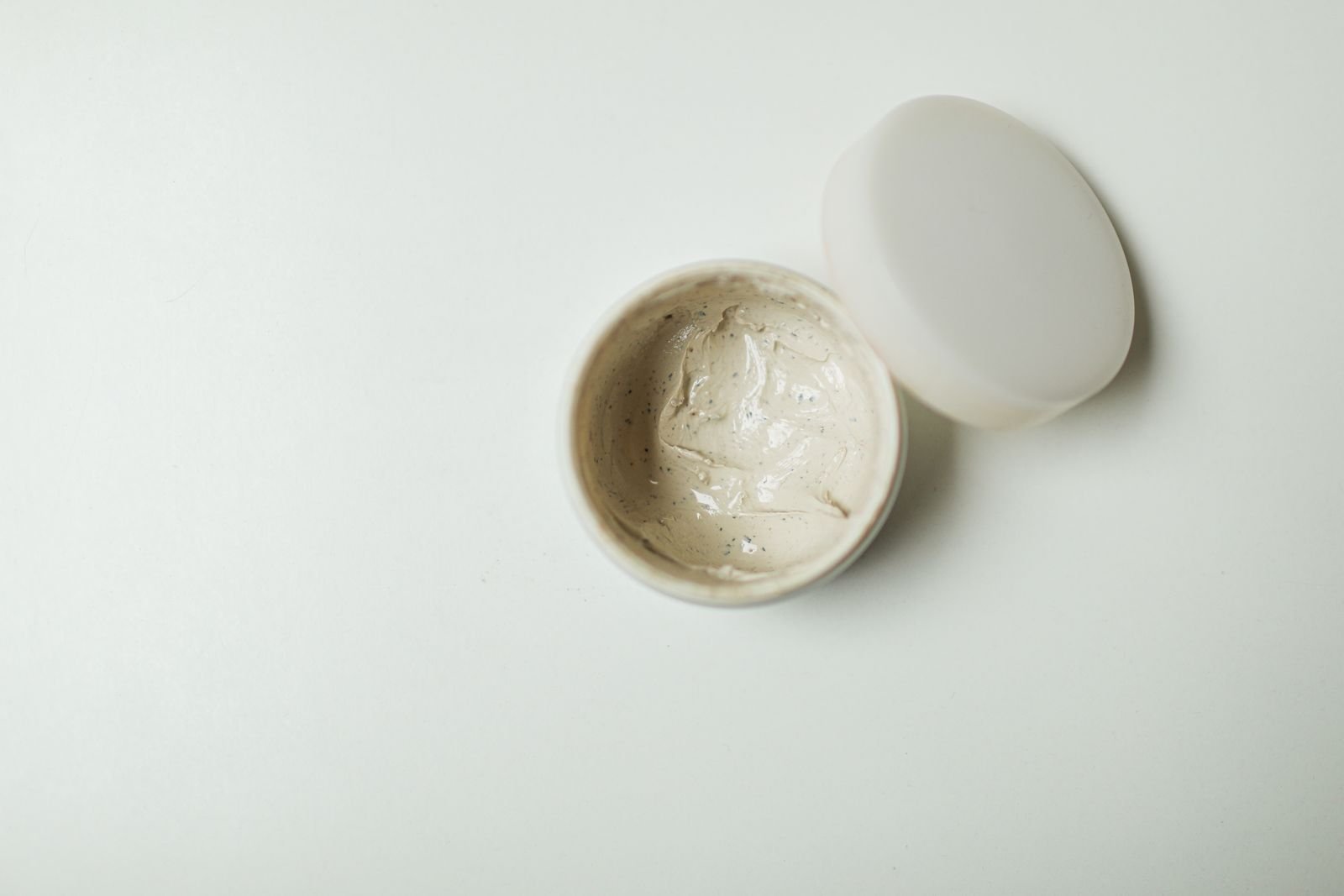
A chalky finish is a formulation problem, not a home SPF test.
The labeled amount goes on, then white residue collects around facial hair, the hairline, and dry patches. Zinc oxide and titanium dioxide scatter visible light as well as ultraviolet radiation. Poor dispersion, larger particle aggregates, and a dry or thick base can make that scattering more obvious.
Cosmetic acceptability still matters. A conspicuous, uncomfortable film makes consistent application less likely. But visible whiteness alone does not establish whether the labeled UV protection is working. SPF is determined under standardized conditions, commonly at 2 milligrams per square centimeter; cast is not part of that measurement. Cracking, pilling, or missed areas are more relevant concerns because they can disrupt the film. Better-dispersed mineral filters, flexible emollients, sheer tints, and thin sequential layers may reduce the residue without requiring less sunscreen.
White cast is a light-scattering problem
Zinc oxide and titanium dioxide are insoluble particles, not filters that dissolve into the base. When visible light reaches them, some light is scattered back toward the observer. That reflected light appears white or gray, with greater contrast on deeper skin tones.
The effect depends partly on the difference between the particles’ refractive index and that of the surrounding formula. Particle size also matters. Particles and clusters that interact strongly with visible wavelengths produce more obvious whitening, while well-dispersed smaller particles generally look more transparent.
Primary size does not tell the whole story
A label may emphasize “micronized” or “nano” zinc oxide, but primary particle size is only one variable. Small particles can agglomerate into larger, uneven clusters during manufacturing or after application. Those clusters scatter more visible light and can collect around hair, pores, and dry patches.
Several formulation choices can reduce the effect:
- Surface coatings and dispersants help keep particles separated.
- Emollients improve wetting and spread across skin.
- Film-forming agents support a thinner, more uniform layer.
- Iron oxides and other pigments mask residual whiteness rather than eliminating scattering.
Titanium dioxide is often described as inherently whiter than zinc oxide because of its stronger visible-light scattering. That comparison is directionally useful, not decisive. A poorly dispersed zinc oxide formula can look chalkier than a carefully engineered blend containing both filters. The complete formula, mineral concentration, tint, and dried film are more informative than the filter name alone.
Why cast color changes across skin tones
A pale mineral residue does not appear identical against every background. On lighter skin, it may register as ordinary whitening. Against deeper skin, greater contrast can make the same film look ashy, gray, blue, or lavender. Undertone also matters: a cool residue may appear more blue over warm or golden skin, while pink or red undertones can shift its apparent color toward violet.
These differences are partly perceptual. The film’s color is judged relative to surrounding skin, and camera exposure, white balance, and lighting can exaggerate or conceal it. A bright bathroom image is weak evidence for how a sunscreen looks in daylight.
“Sheer” should therefore be treated as a complexion-dependent claim, not a universal property. Before buying, stronger finish evidence includes:
- Photos or video on a similar skin depth and undertone
- Application of the labeled amount, rather than a small swatch
- Daylight footage after the film has dried
- Views of the hairline, eyebrows, and facial creases, where residue collects
A single universal tint may reduce stark whitening yet still look orange, pink, or gray on some complexions. Broad “invisible” marketing is not well supported when a brand shows only one model or relies on blended hand swatches.
Why formulation changes the finish
Mineral filters do not remain as perfectly separate particles. Primary zinc oxide or titanium dioxide particles can form aggregates and looser agglomerates. These larger clusters scatter more visible light and create streaks, even when the original particles are small.
Surface coatings, oils, silicones, and dispersing agents can improve wetting and keep particles distributed through the film. Better dispersion generally produces a thinner-looking, more even finish. It can also improve spreadability, although a fluid texture may encourage underapplication.
Smaller particles usually scatter less visible light, but “non-nano” does not automatically mean safer, more effective, or less whitening. The term does not describe cluster size in the finished formula, and US labeling lacks a single consumer-facing size standard. Particle size can also shift the balance of UV attenuation, so transparency alone is not a complete performance measure.
“Transparent zinc” is therefore a formulation claim, not proof. Stronger support would include the particle-size distribution, coating, dispersion method, and data from the finished product. Reviews are more informative when they show the dried film on several skin tones at the labeled application amount. Similar distinctions matter when assessing how CeraVe and Blue Lizard mineral sunscreens compare.
A non-nano claim may coexist with obvious cast if particles cluster or spread unevenly. Without finished-formula specifications and credible wear evidence, paying extra for “transparent zinc” is difficult to justify.
Tint is the more reliable correction
Tint addresses white cast more directly than particle-size claims. Iron oxides and other pigments add color to the dried film, reducing the contrast between zinc oxide or titanium dioxide and the skin. This tends to be more dependable on medium-deep and deep complexions, where even a relatively sheer white residue remains conspicuous.
A tint is not automatically inclusive. A shade that is too light can still appear gray or ashy; one that is too dark may leave an obvious edge at the hairline. Undertone also matters: an overly pink, orange, or yellow base can replace white cast with a different mismatch. The practical comparison is tinted versus untinted sunscreen on deeper skin tones at the labeled application amount, after the film has dried.
Useful selection criteria include:
- Several shade depths, rather than one “universal” tint
- Undertone information or dried swatches across varied skin tones
- Iron oxides in the ingredient list, not merely a beige product color
- Review images in daylight, with attention to oxidation and transfer
Iron oxides also absorb portions of visible light. Controlled studies have found greater visible-light attenuation from iron-oxide-tinted formulas than from otherwise comparable untinted ultraviolet filters. That evidence supports tint as a relevant formulation feature, not a treatment claim. A poorly matched or patchy tint remains a poor value, regardless of its pigment content.
Build an even film without reducing the dose
-
Start with a settled base
Apply moisturizer where needed, then allow it to absorb until the surface feels settled rather than wet or slippery. Excess product underneath can promote streaking, migration, and uneven drying.
-
Follow the shaking directions
Shake when the label instructs. Fluid and bi-phase vehicles can separate during storage, so skipping this step may produce inconsistent pigment, mineral, or liquid distribution.
-
Divide the labeled amount
Measure the full labeled dose, but apply it in two or three controlled passes. Smaller passes can improve placement without sacrificing the total amount needed to form the intended film.
-
Spread, then stop
Use short, light strokes to distribute each pass across adjacent areas. Let the layer settle before adding the next; repeated rubbing after the film begins to set can create patches or lift product.
-
Match technique to the vehicle
Fast-drying fluids require quick section-by-section placement. Thicker creams generally allow more working time but may pill over incompatible skincare; these steps can help reduce sunscreen pilling under makeup.
Makeup should follow only after the sunscreen film has set. Drying time varies by vehicle, humidity, and the products underneath.
Mixing sunscreen with moisturizer, serum, or foundation makes dose and distribution unpredictable. It can also interfere with the film the formula was designed to form.
A persistent cast should not be rubbed indefinitely to force it to disappear. If the labeled amount remains conspicuous after controlled application, a better-dispersed or appropriately tinted formula is the more rational correction.
Evidence that predicts the dried finish
- Judge the formula, not the headline
“Sheer,” “invisible,” and “transparent zinc” are not standardized finish measurements. Filter percentage may affect opacity, but dispersion, coatings, tint, vehicle, dose, and drying behavior prevent percentage alone from ranking cast.
More informativeWhen choosing a mineral facial sunscreen, prioritize dried, full-dose face images across several skin depths, plus complete Drug Facts and ingredient lists.Less informativeDo not infer a clear finish from a low zinc percentage, wet hand swatch, luxury price, or “non-nano” claim. - Match the correction to the cast
Stark white residue points toward stronger tint or better mineral dispersion. Gray or purple tones more often indicate tint-depth or undertone mismatch; patchy buildup suggests pilling, poor spread, dryness, or incompatibility with products underneath.
More informativeChoose tint depth and undertone for color mismatch. For patchiness, assess the vehicle, skin preparation, drying time, and compatibility before changing shade.Less informativeDo not reduce the labeled amount to improve appearance; a cosmetically acceptable film at a partial dose is a poor comparison standard.
The practical standard is the full labeled application, allowed to dry and viewed in daylight and indoor light. Patch testing a small area can reveal irritation, tint mismatch, or pilling before broader use. Return terms should be checked before opening because policies differ for used sunscreen.
A costly formula is not worth the money when its evidence consists mainly of loaded finish claims or thin swatches. If the correct dose remains conspicuous or uneven despite compatible application, a better-matched tint or vehicle is the more rational remedy.
