

A strong SPF number cannot compensate for a tint that looks conspicuous or a finish that breaks down by lunch.
A mineral sunscreen may blend at 8 a.m., then turn dry around the mouth, collect near the hairline, or separate under makeup. That cosmetic failure often determines whether the bottle gets finished.
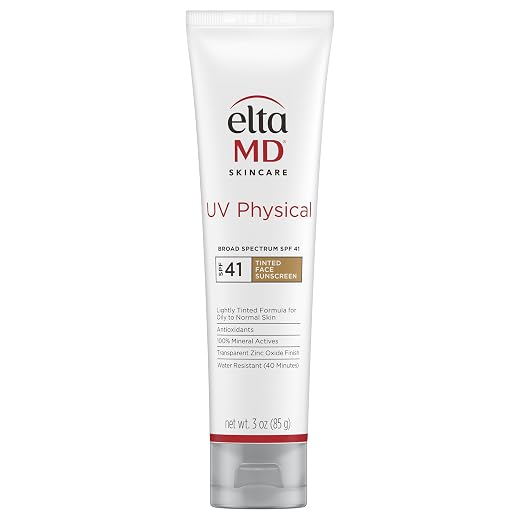
“Staying power” requires restraint. The FDA distinguishes SPF from water-resistance labeling; neither predicts an elegant all-day finish. Here, durability is judged from manufacturer specifications and recurring themes in aggregated user feedback. EltaMD UV Physical centers on a single tint, while Australian Gold offers Fair-to-Light and other shade options with a higher labeled SPF. The practical choice depends on shade fit, dryness, and reported wear, not SPF alone.
Filters are not the variable here. Both are mineral, both are tinted, and a mineral formula only protects the skin it stays on, so the useful comparison is how each behaves through a working day and where each one gives up.
Choose by the tradeoff that matters


SPF 50 does not automatically mean better wear, and a closer tint match does not replace adequate application. The American Academy of Dermatology recommends broad-spectrum, water-resistant SPF 30 or higher and regular reapplication. Finish, shade, and expected exposure should determine which compromise is more practical.
The figures below come from the current listings rather than the marketing: filter load, SPF, water resistance, size and price per ounce. The differences that matter for daily wear are smaller than the front labels suggest.
| Shade-conscious pick EltaMD UV Physical Tinted Mineral SPF 40 | VS | Higher-SPF alternative Australian Gold Botanical Tinted Mineral SPF 50 |
|---|---|---|
40/41 listing | Listed SPF |
50 |
100% mineral | Mineral claim |
Mineral |
Not supplied | Broad spectrum |
Listed |
Not supplied | Water resistance |
Interval absent |
9.0/10 | Editorial score |
8.5/10 |
| View | View |
What the SPF gap means
The FDA explains that SPF primarily measures UVB protection, while “broad spectrum” denotes UVA and UVB coverage. Australian Gold’s SPF 50 exceeds EltaMD’s listed SPF 40/41 on that UVB-centered metric. It does not independently prove stronger UVA protection; this SPF 30 versus SPF 50 explanation puts the numerical difference in context.
SPF is also not a wear-time rating. Water resistance is a separate label claim, normally paired with a 40- or 80-minute interval. The supplied Australian Gold listing states water resistance but omits the interval, while no equivalent EltaMD detail was supplied.
Shade match, dryness, pilling, transfer, and cosmetic persistence are review-derived observations rather than label facts. Without supplied review aggregates, those outcomes cannot be ranked reliably here. EltaMD’s higher editorial score supports its shade-focused position; Australian Gold’s clearer advantage is the SPF 50 listing.
EltaMD leads with the tint. That is a real advantage when the shade lands and close to worthless when it does not, which makes it the first thing to check rather than the last.
The tint-first mineral option, with limits
Top choice for a streamlined mineral sunscreen routine
EltaMD UV Physical is a tinted, 100% mineral face sunscreen labeled SPF 40. It is the more shade-conscious candidate only if its particular tint and finish suit the wearer; the supplied listing does not document shade range or finish.
The FDA separates SPF from broader protection and use considerations. SPF 40 alone therefore does not establish better cosmetic wear, UVA performance, or value.
| Protection label | SPF 40 |
| Filter type | 100% mineral |
| Color format | Tinted |
| Intended area | Face |
| Shade range | Not supplied |
| Finish | Not supplied |
| Water resistance | Not supplied |
The specifications support a tint advantage only once a shade match exists. Aggregated listings cannot tell you whether a given depth will oxidize on your skin, and that is the variable doing most of the work.
- Tint may reduce the visible cast associated with untinted mineral formulas
- Mineral-only positioning is explicit
- Face-specific format supports a streamlined routine
- No supplied shade description or range
- Finish and wear persistence are undocumented
- Ingredient list is unavailable for verifying supporting skincare claims
- Premium positioning does not demonstrate superior performance
EltaMD UV Physical is the more plausible option when its tint matches and mineral filters are preferred. It is not worth paying a premium solely for the brand position: the supplied evidence does not establish broader shade coverage, longer wear, or superior protection quality.
Australian Gold argues from wear instead. Higher SPF, water resistance and a matte set are the case here, and the trade is a finish that shows dryness more readily than a dewier formula would.
The higher-SPF, matte-wear candidate
Best for higher labeled SPF and water resistance
This tinted mineral lotion targets readers who prioritize a higher labeled SPF and water resistance over a flexible finish. FDA guidance treats SPF, broad-spectrum coverage, and water resistance as distinct label claims.
| SPF | 50 |
| Coverage | Broad spectrum |
| Formula | Mineral lotion |
| Finish | Tinted |
| Wear claim | Water resistant |
| Size | 3 oz |
| Listing shade | Not specified |
- Higher labeled SPF than EltaMD UV Physical
- Aggregated reviews frequently describe firm grip
- Reviewers often report limited transfer after setting
- Water-resistant positioning suits active wear
- Matte finish may emphasize dry areas
- Some reviews describe a tight or drying feel
- Persistent film can require thorough cleansing
- Supplied retailer title omits the exact shade
Australian Gold is worth considering when SPF 50, water resistance, and a set matte finish matter most. Aggregated reviews suggest stronger grip but also more dryness and harder removal. The supplied Amazon title does not identify the exact shade, so the retailer selector and package label should be checked before purchase.
The third listing narrows the shade question rather than answering it. A named depth removes one variable; undertone and oxidation are still yours to test on your own face.
A dedicated fair-to-light depth option
Best for fair complexions seeking matte, fragrance-free coverage
Australian Gold Fair-to-Light is intended for lighter complexions that find a universal tint too deep. It combines mineral UV filters with powder-matte, BB-cream-style coverage for daily facial use.
| SPF | 50 |
| Coverage | Broad spectrum |
| Titanium dioxide | 4% |
| Zinc oxide | 4% |
| Tint | Fair to Light |
| Finish | Powder matte |
| Fragrance | Fragrance-free |
- Defined depth reduces shade guesswork
- Mineral-only listed UV filters
- Matte, tinted finish
- Undertone compatibility remains uncertain
- Oxidation data are not supplied
- Matte finish may accentuate dryness
Fair-to-Light reduces depth uncertainty without resolving undertone, oxidation, or finish compatibility. Check the current shade name and Drug Facts rather than assuming every Australian Gold tint shares identical labeling. The FDA explains why SPF and broad-spectrum labeling describe different protection measures.
Every mineral sunscreen in this category asks for a concession somewhere: cast, dryness, transfer, or price. Choosing well means deciding which of those you will tolerate every morning, because the bottle you skip protects nothing.
Choose the failure that matters most
A conspicuous tint can discourage applying the labeled amount, making a small SPF difference less meaningful.
Australian Gold’s matte finish may suit oilier skin but can emphasize dryness, according to aggregated review patterns.
Perspiration and water exposure make labeled water resistance more consequential than indoor cosmetic wear.
Fragrance sensitivity, difficult removal, or an unwearable tint can leave more product unused.
For daily wear, shade compatibility often matters more than SPF 40 versus 50. Start with whether tinted or untinted mineral sunscreen fits the routine. For swimming or heavy perspiration, follow the FDA’s water-resistance guidance and favor an appropriately labeled formula.
Three ideas about tint, SPF and layering come up often enough to answer directly, because each one leads people to apply less sunscreen than they believe they are applying.
Tint, SPF, and Layering Myths
Does tint block visible light?
Not automatically. Iron oxides can improve visible-light attenuation, but tint alone proves neither their presence nor tested protection.
Does SPF 50 last longer than SPF 40?
No. SPF measures UVB protection, not wear time. The FDA advises reapplication at least every two hours.
Why can sunscreen pill beneath makeup?
Thick layers or short drying times can make sunscreen films roll up. Pilling beneath makeup often improves with lighter skincare layers and more setting time.
Can makeup replace sunscreen reapplication?
Usually not. Makeup rarely supplies the labeled sunscreen dose, so outdoor exposure still calls for timely reapplication.
Match the Formula to the Day
EltaMD is the more defensible choice when its tint fits and water-resistant wear is not a priority. Australian Gold makes more sense when a matte finish, labeled water resistance, or the Fair-to-Light shade matters more. Neither is universally preferable; the tradeoff is cosmetic flexibility versus activity-oriented wear.
Before ordering, compare the current shade and ingredient label with the broader mineral sunscreen buying criteria. Check returns, patch test, and follow package directions for water resistance and reapplication; FDA guidance notes that no sunscreen is waterproof. If both tints or finishes look unsuitable, consider an untinted formula or a wider tint range.
