

Apply azelaic acid to clean, dry skin before moisturizer, starting three times a week.
That’s the whole method. Patch-test first, use a pea-sized amount after cleansing, and build up to once a day over a few weeks. Morning works best for most routines, followed by moisturizer and sunscreen, because it leaves your evening free for retinol or exfoliating acids.
Azelaic acid calms redness, helps with breakouts and fades dark marks, and it’s gentle enough for most skin types. Below are the three steps, plus which 10% formula to buy: The Ordinary for oily skin on a budget, Anua for an easy-layering serum, Good Molecules for dry or sensitive skin.
- Oily skin, low cost The Ordinary Azelaic Acid Suspension 10% is a silicone-rich cream-gel. It’s the low-cost pick for oily skin, but it can pill under several layers.
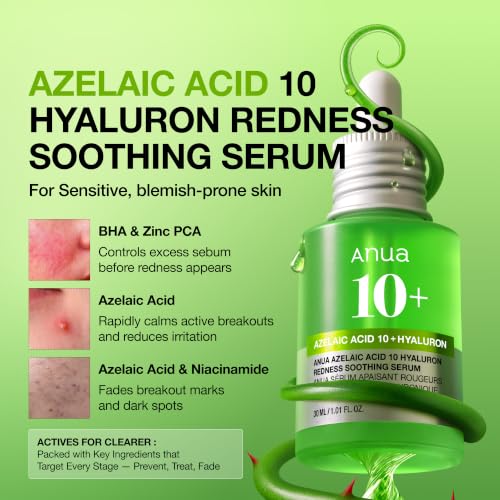
- Easiest to layer Anua Azelaic Acid 10 Hyaluron Redness Soothing Serum is a light serum with panthenol, hyaluronic acid, niacinamide and centella. It layers most easily and suits oily or combination skin.
- Dry or sensitive skin Good Molecules 10% Azelaic Acid Treatment is a soft, fragrance-free cream with bisabolol and centella. It’s the gentlest pick for dry or sensitive skin.
All three use 10% azelaic acid. Choose by texture and skin type.
Patch-test before applying it widely
Apply a small amount along your jawline once a day for three or four days. Keep the rest of your routine exactly the same while you test, so any reaction can only come from the azelaic acid.
A brief tingle or a little dryness is normal with azelaic acid and usually fades within the first couple of weeks. Redness that spreads, stinging that lasts, or itching is not. Wash it off and stop using it.
If you're using azelaic acid for rosacea or melasma, see a dermatologist. Prescription-strength azelaic acid is stronger than these 10% formulas.
Don’t start azelaic acid in the same week as a new retinoid, acid or cleanser. If your skin reacts, you want to know exactly which product did it.
Choose a morning or evening slot
Azelaic acid works morning or night. Morning is usually best: it pairs well with sunscreen, and it keeps your evening free for retinol or an exfoliating acid. Either way, it goes on clean, dry skin before moisturizer.
Morning order
- Cleanse and pat skin dry.
- Apply azelaic acid and let it set for a minute.
- Add moisturizer.
- Finish with broad-spectrum sunscreen, SPF 30 or higher. Reapply every two hours when you're outdoors.
Evening order
- Cleanse and pat skin dry.
- Apply azelaic acid.
- Follow with moisturizer.
Texture decides where it sits. A watery serum like Anua goes on right after cleansing, before anything else. A thicker cream like The Ordinary or Good Molecules goes after any thin hydrating serum and before moisturizer.
Pick one slot and stick with it for the first month. If you use retinol at night, put azelaic acid in the morning. If your mornings are already crowded, use it at night on the nights you skip other actives.
Build up frequency, then space out other actives
Start with azelaic acid three times a week, on non-consecutive days. If your skin is comfortable after two weeks, go to every other day, then once a day. Once a day is enough for most people. Twice a day is an option with labels that allow it, but only if once a day causes no irritation.
Use a pea-sized amount for your whole face. More product doesn't work faster; it just stings more. If dryness or stinging builds, drop back one step in frequency for a week, then try again.
Space out other actives when needed
Azelaic acid gets along with most actives, but stacking several in one routine is what causes dryness and stinging. The fix is simple: give each strong active its own slot. For a full retinol schedule, see our guide to using retinol and azelaic acid together.
- Retinoids: Azelaic acid in the morning, retinoid at night. If your skin is sensitive, alternate nights instead.
- AHAs and BHAs: Use them on different nights from azelaic acid, at least for the first month.
- Vitamin C: If they sting or pill together in the morning, move azelaic acid to the evening.
- Benzoyl peroxide: Use one in the morning and the other at night.
Pilling is a texture problem, not a sign the ingredients are fighting. Use less product, let each layer dry for a minute, and pat rather than rub. If it still pills, move azelaic acid to the routine with fewer layers.
The Ordinary Azelaic Acid Suspension 10%
The Ordinary's version is a cream-gel built on water, isodecyl neopentanoate and dimethicone, with 10% azelaic acid and more silicone polymers to keep it smooth. That silicone base suits oily skin and short routines. It's labeled for use morning and evening, but it shouldn't share a routine with retinoids or strong acids.
Choose it if your skin is oily, you keep your routine short, and you want the lowest cost. Skip it if your routine has several layers or you wear makeup over it. Silicone-heavy formulas are the most likely to pill, so pat it on, give it a minute, and use less than you think you need.

10% azelaic acid in a silicone-rich cream-gel with a smooth, silky finish. The low-cost pick for oily skin and short routines.
It can pill under several layers. Use a pea-sized amount, pat it in, and keep it out of your retinol routine.
Anua: the light, layerable serum
Anua's serum is a light, water-based formula. After azelaic acid, the list includes panthenol, sodium hyaluronate, niacinamide, zinc PCA, licorice-derived dipotassium glycyrrhizate and several forms of centella. It also contains betaine salicylate, a mild BHA-like exfoliant, so if you already use a salicylic acid product, keep them on different days at first.
Choose Anua if you want azelaic acid as a quick serum step under moisturizer and sunscreen, or if The Ordinary pills on you. Skip it if price matters most; the other two cost less. Our Anua vs. The Ordinary azelaic acid comparison puts the two formulas side by side.
A light, fragrance-free serum with azelaic acid, panthenol, hyaluronic acid, niacinamide and centella, plus a little betaine salicylate. The easiest of the three to layer, and the best fit for oily, combination or redness-prone skin. It costs more than the other two.
Good Molecules: the gentle cream
Good Molecules puts 10% azelaic acid in a cream base: water, caprylic/capric/succinic triglyceride, glycerin and a little passion fruit seed oil. Soothing extras include bisabolol, centella and ginger root extract, plus vitamin E. There are no silicones near the top of the list, so it feels softer and less slick than The Ordinary.
It's labeled fragrance-free and suitable for daily use. Massage it in and let it absorb before the next layer. Use it in the morning under sunscreen if you use retinol at night.
Choose it if your skin runs dry, flushes easily, or pills under The Ordinary's silicones. Skip it if your skin is very oily and you want a light, fast-drying layer; Anua or The Ordinary will suit you better.
A fragrance-free 10% azelaic acid cream in a triglyceride and glycerin base, with bisabolol, centella and ginger root extract. The best of the three for dry or sensitive skin, and it costs about the same as The Ordinary.
Your azelaic acid routine in one line
Patch-test, start three times a week, build to once a day, and put it on clean skin before moisturizer. In the morning, finish with sunscreen. Keep it on a different routine from retinol and strong exfoliating acids.
For the product: choose The Ordinary if your skin is oily and you want a low-cost 10% with a silicone feel. Choose Anua if you want a light, hydrating serum that layers easily and adds niacinamide and centella. Choose Good Molecules if your skin is dry or sensitive and you’d rather have a soft cream with soothing extras.
Give it two to three months of steady use before judging results on redness or dark marks.
