

Both are thick, fragrance-free creams. Vanicream keeps it bare; Cetaphil adds extras.
Cetaphil Moisturizing Cream and Vanicream Moisturizing Cream do the same basic job: put a rich layer on dry skin and keep water from escaping. Vanicream is the minimalist. Petrolatum and sorbitol do the work, and there’s no fragrance, dye, lanolin, plant oil or botanical extract. Cetaphil is the fuller formula. Glycerin comes first, and it adds niacinamide, panthenol, vitamin E and two plant oils.
So the real question is how reactive your skin is. If it flares at almost anything, buy Vanicream. If it’s simply dry, Cetaphil does a little more, and its 20-ounce tub usually costs less per ounce.
Which cream fits your skin?
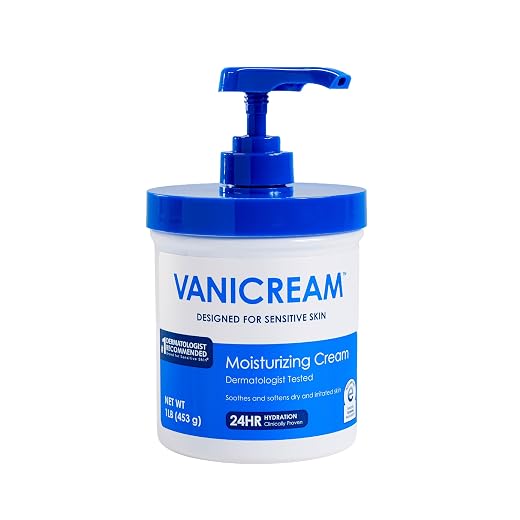


Best for sensitive skin Vanicream Moisturizing Cream for Sensitive Skin, 16oz Pump | Best value for dry skin Cetaphil Moisturizing Cream for Face and Body, 20oz | Smaller size Cetaphil Moisturizing Cream for Face and Body, 16oz | |
|---|---|---|---|
|
|
|
| |
| Main moisturizers | Petrolatum, sorbitol | Glycerin, petrolatum, dimethicone | Glycerin, petrolatum, dimethicone |
| Extras | None | Niacinamide, panthenol, vitamin E | Niacinamide, panthenol, vitamin E |
| Plant oils | None | Sunflower seed, sweet almond | Sunflower seed, sweet almond |
| Fragrance | None | None | None |
| Size and format | 16 oz pump | 20 oz tub | 16 oz tub |
| View | View | View |
How the ingredients compare
Humectants pull water into the skin. Occlusives sit on top and slow water loss. Emollients smooth rough patches and help a cream spread. Both creams use all three. The difference is which one leads and what else comes along.
Cetaphil puts the humectant first: glycerin is the second ingredient, then petrolatum and dimethicone. It adds panthenol, niacinamide, vitamin E, sunflower seed oil and sweet almond oil. That makes it the more complete formula for dry skin that doesn't irritate easily.
Vanicream puts the occlusive first: petrolatum comes right after water, then sorbitol as the humectant. The rest is texture and preservation. No plant oils, no fragrance, no extras. That's the point: fewer ingredients means fewer things your skin can react to.
So the choice comes down to your skin. If it tolerates most things, Cetaphil gives you more per ounce. If it's reactive, eczema-prone or sensitive to plant ingredients, Vanicream is the safer bet.
Cetaphil 20 oz: more extras, lower cost per ounce
Glycerin-rich cream with niacinamide and panthenol.
Cetaphil’s cream leads with glycerin, a humectant that draws water into the skin, followed by petrolatum and dimethicone to hold it there. Dicaprylyl ether and cetyl alcohol keep it spreadable, so it feels a little lighter than Vanicream.
The extras set it apart: panthenol (vitamin B5) to soften and soothe, niacinamide to support the skin barrier, and vitamin E, sunflower seed oil and sweet almond oil as emollients. They sit in the middle of the list, so think of them as support, not treatment. Together they make a fuller formula than Vanicream’s.
It’s fragrance-free. The plant oils are the catch for very reactive skin, and if you avoid nut-derived ingredients, pick Vanicream. The 20-ounce tub usually costs the least per ounce of these three, which adds up if you moisturize your whole body every day.
- Glycerin-first formula with niacinamide and panthenol
- Usually the lowest cost per ounce of the three
- Big 20-ounce tub for daily body use
- Contains sweet almond and sunflower seed oils
- Tub means scooping with your fingers
- More cream than you’ll finish if you only use it on your face
Vanicream: a bare-bones cream for reactive skin
Short, fragrance-free formula in a pump.
Vanicream’s list is short: water, petrolatum, sorbitol, cetearyl alcohol, propylene glycol, ceteareth-20, simethicone, glyceryl stearate, PEG-30 stearate and sorbic acid. Petrolatum, second on the list, forms a seal that slows water loss. Sorbitol is a humectant that pulls water into the skin, and cetearyl alcohol gives the cream its thick, soft body.
What’s missing matters just as much. There’s no fragrance, dye, lanolin, paraben, plant oil, essential oil or botanical extract, which removes the usual triggers for sensitive and eczema-prone skin. It carries the National Eczema Association Seal of Acceptance and is labeled non-comedogenic.
The 16-ounce pump keeps your fingers out of the cream. The trade-off: no niacinamide, panthenol or other extras, and it usually costs more per ounce than Cetaphil’s big tub.
- Short list with no fragrance, dyes, lanolin, parabens, plant oils or botanical extracts
- Petrolatum-rich formula seals in moisture well
- Pump keeps the cream clean and works one-handed
- Carries the National Eczema Association Seal of Acceptance
- No extras like niacinamide or panthenol
- Usually costs more per ounce than Cetaphil’s 20-ounce tub
Cetaphil 16 oz: the same cream in a smaller tub
Same formula, smaller tub.
This is the same formula as the 20-ounce tub: glycerin, petrolatum and dimethicone for moisture, plus panthenol, niacinamide, sunflower seed oil and sweet almond oil. Only the size changes.
It makes sense if you mostly use cream on your face, or want to try Cetaphil before committing to the bigger tub. If you moisturize your whole body every day, the 20-ounce tub usually costs less per ounce and lasts longer.
- Same formula as the 20-ounce tub
- Smaller tub suits face-only use
- Easy way to try Cetaphil before buying the big size
- Usually costs more per ounce than the 20-ounce tub
- Still a scoop-from-the-tub format
Texture, face use and packaging
Both are thick creams, not lotions. Vanicream feels more like a seal on the skin because petrolatum is its second ingredient. Cetaphil leads with glycerin and adds dimethicone and a light emollient, dicaprylyl ether, so it spreads a little more easily. Under sunscreen or makeup, use a thin layer of either and give it a few minutes to settle.
Packaging is the practical split. Vanicream's pump dispenses one-handed and keeps your fingers out of the cream. Cetaphil's tub is easier to scrape clean at the end, and the 20-ounce size suits slathering it on after a shower.
Your face needs less than your body. On your face, a pea-sized amount spread thin is usually enough; more just sits on top. On arms, legs and hands, use as much as your skin soaks up.
Cetaphil contains sweet almond oil and sunflower seed oil. If you avoid nut-derived ingredients, buy Vanicream. If eczema keeps flaring even with a plain moisturizer, see a dermatologist.
Which cream should you buy?
Choose Vanicream if your skin is sensitive, eczema-prone or reacts to almost everything. Petrolatum and sorbitol do the work, and there’s no fragrance, dye, lanolin, plant oil or botanical extract in it. The pump keeps the cream clean.
Choose Cetaphil if your skin is dry but not especially reactive. It leads with glycerin, adds niacinamide and panthenol, and the 20-ounce tub usually costs less per ounce. Pick the 16-ounce tub only if you mostly use it on your face or want to try it first.
Either way, apply it to slightly damp skin right after washing to hold in the most water.
